

The Deal Failure Epidemic
Understanding commodity deals fail is essential for modern commodity traders. In commodity trading, 70-80% of initiated deals never close. That’s not a typo. For every 10 deals you start, only 2-3 actually complete.
Understanding why deals fail is the first step to improving your close rate.
Reason 1: Unverified Counterparties: Commodity Deals Fail Essentials
The Problem:
You spend 3 months negotiating with a buyer who doesn’t actually have the money. Or a seller who doesn’t actually have the product. This directly impacts how commodity deals fail performs in real-world trading scenarios.
The Cost:
– 3 months of wasted time
– $5,000-15,000 in legal and travel expenses
– Lost opportunity with real counterparties
The Solution:
Verify before you negotiate.
On Trados:
– Buyers are financially verified (Silver tier minimum for large deals)
– Sellers are production-verified
– Brokers are mandate-authenticated
Result: Close rate jumps from 20% to 70%.
Reason 2: Documentation Chaos
The Problem:
LOI sent. Revision 1. Revision 2. Where’s the latest version? Who has the signed copy? What were the changes?
The Cost:
– Deal delays (2-4 weeks on average)
– Miscommunication and disputes
– Legal confusion
The Solution:
Centralized document management.
Features that prevent chaos:
– Single source of truth for all documents
– Version control (who changed what, when)
– Real-time access for all parties
– Audit trail of every action Experienced professionals in commodity deals fail consistently emphasize this point.
Result: Document-related delays eliminated.

Reason 3: Unclear Communication
The Problem:
“I thought you said…” “No, what I meant was…” “But in the email you wrote…”
Sound familiar?
The Cost:
– Trust erosion
– Deal renegotiation
– Relationship damage
– Transaction delays
The Solution:
Structured communication channels.
Instead of scattered emails and WhatsApp:
– Centralized deal rooms
– Threaded discussions
– Documented decisions
– Clear role assignments
Result: Miscommunication reduced by 90%.
Reason 4: Process Ambiguity
The Problem:
No clear next steps. Who sends the ICPO? When does inspection happen? What’s the payment timeline? When evaluating commodity deals fail, this factor plays a significant role.
The Cost:
– Analysis paralysis
– Deal stagnation
– Counterparty frustration
– Eventually: Deal death
The Solution:
Standardized workflows.
Trados workflow:
1. Registration & Verification (clear requirements)
2. LOI Submission (standardized format)
3. ICPO Response (defined timeline)
4. SPA Execution (template with customization)
5. Delivery & Payment (automated notifications)
Result: Average deal time reduced from 4 months to 6 weeks.
Reason 5: Lack of Trust
The Problem:
Both parties are protecting themselves so much that nothing moves forward. Endless due diligence. Constant requests for “one more document.”
The Cost:
– Deal fatigue
– Opportunity cost
– Competitive disadvantage (others close faster)
The Solution:
Pre-established trust framework.
When both parties are verified:
– Trust is established upfront
– Due diligence is streamlined
– Focus shifts to deal terms, not verification
– Speed becomes competitive advantage This is a critical aspect of commodity deals fail that every trader should understand.
Result: Trust-building time reduced from months to days.
The Compound Effect
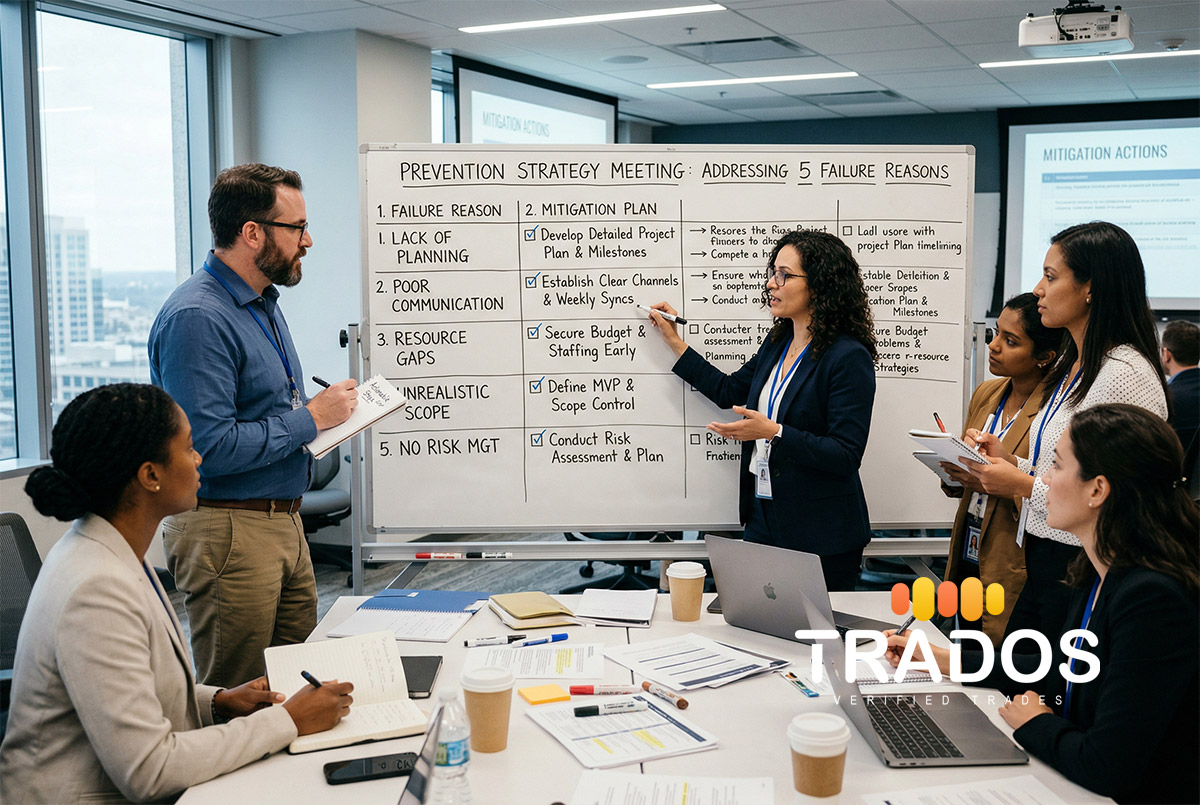
These five reasons don’t operate in isolation. They compound:
Typical failed deal:
1. Unverified buyer (found out after 2 months)
2. Documents scattered across email
3. Miscommunication about delivery terms
4. No clear process for next steps
5. Trust breaks down, deal collapses
Total time wasted: 4 months
Total cost: $20,000+
The Successful Deal Pattern
Verified deal on Trados:
1. Pre-verified buyer and seller (verified in 48 hours)
2. Documents in central repository (always current)
3. Clear communication in deal room (threaded, documented)
4. Structured workflow (everyone knows next steps)
5. Trust established (verification badge = credibility)
Total time to close: 6 weeks
Total cost: $3,000
Your Action Plan
This week:
1. Audit your last 10 failed deals. Which reasons apply?
2. Calculate your actual cost of failed deals
3. Identify your biggest failure point
This month:
1. Implement verification for all new counterparties
2. Set up centralized document management
3. Create standardized workflows
This quarter:
1. Track close rate improvement
2. Measure time-to-close reduction
3. Calculate cost savings
The Bottom Line
Deal failure isn’t inevitable. Most failures are preventable with:
– Verification
– Organization
– Communication
– Process
– Trust
You don’t need more deals. You need more deals that close.
[Start Closing More Deals →](/contact)

Related Articles
Learn more about GAFTA trade standards.

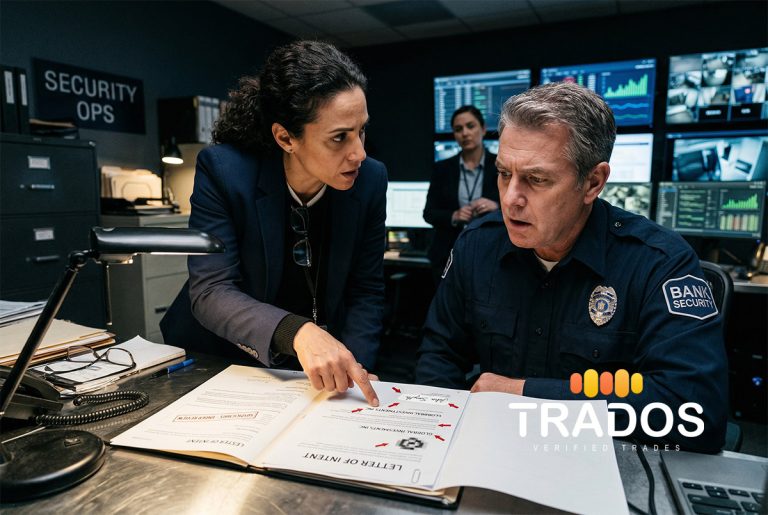

Our firm processed over 200 LOIs last year. Before implementing proper verification, roughly 15% turned out to have issues. After? Less than 2%.
What’s the cost comparison between building an in-house verification system vs using a platform like Trados?
How does blockchain verification compare to traditional methods? We’ve been hearing a lot about it but haven’t seen real implementations.
After reading this, I immediately audited our current LOI process. Found three gaps we need to address. Thank you.
This saved me a lot of headaches.
Good article overall but I think it could benefit from more specific examples of red flags in different commodity sectors. Sugar and oil LOIs have very different characteristics.
Clear and to the point. Love it.
What’s the minimum team size you’d recommend for implementing an in-house verification system? We have about 20 traders.