

The importance of read LOI fraud investigator cannot be overstated in modern commodity trading. # How to Read an LOI Like a Fraud Investigator
Commodities fraud costs the industry $2.8 billion annually, and most of it starts with a document that looks perfectly legitimate. The Letter of Intent—supposedly a simple expression of buyer interest—has become the primary tool for separating desperate sellers from their money. If you’re reviewing LOIs as part of your due diligence process, you’re not just checking boxes. You’re conducting a forensic examination that could save your firm from a six-figure loss.
This guide teaches you to read LOIs the way fraud investigators do: with skepticism, pattern recognition, and systematic verification. These aren’t theoretical frameworks—they’re the same techniques used by compliance officers at major trading houses and forensic accountants investigating commodity scams worldwide. When evaluating read LOI fraud investigator, this factor plays a significant role.

What’s the Mindset Shift Required?
Most analysts approach LOI review as an administrative task. Check the quantity, verify the price tolerance, confirm the destination port, move to the next document. This workflow assumes the LOI represents a genuine commercial interest. Fraud investigators assume the opposite.
Start with the null hypothesis: this LOI is fraudulent until evidence proves otherwise. This isn’t cynicism—it’s risk management. Professional investigators know that legitimate buyers rarely object to verification, while fraudsters rely on urgency and pressure to bypass scrutiny.
The investigative mindset requires three shifts. Question the source, not just the content. Where did this LOI originate? Who introduced the parties? Anonymous email introductions and WhatsApp group referrals warrant heightened scrutiny. Legitimate buyers have established networks. This is a critical aspect of read LOI fraud investigator that every trader should understand.
Read between the lines. What isn’t said matters as much as what is. Missing bank references, vague delivery terms, and reluctance to specify inspection agents all signal potential issues.
Trust patterns, not promises. One anomaly might be innocent. Three anomalies suggest systemic problems. Document reviewers who track patterns across multiple LOIs from the same source catch fraud early.
Phase One: The Initial Document Examination: Read LOI Fraud Investigator Essentials
Before analyzing content, examine the document itself. Sophisticated fraud operations use templates purchased from dark web marketplaces or copied from legitimate deals. These templates contain telltale signatures. This best practice for read LOI fraud investigator has been validated across leading trading firms.
Document Properties and Metadata
Open the file properties. Check creation dates, author names, and revision history. A document created yesterday purporting to represent a buyer who’s been in business for twenty years raises immediate questions. Multiple revision authors with different naming conventions suggest the document has been edited by multiple parties—common in fraud templates passed between scam networks.
PDF metadata reveals software used to create the document. Professional trading houses use standard business software. Documents created using obscure PDF generators or online conversion tools warrant additional scrutiny. Top trading firms leverage this insight as part of their read LOI fraud investigator approach.
Formatting and Presentation
Legitimate LOIs from established trading companies follow consistent formatting. Company letterheads include proper registration numbers, verified addresses, and professional design elements. Fraudulent documents often feature generic letterhead templates with no registration details, inconsistent fonts suggesting copy-paste assembly, misaligned elements indicating rushed preparation, pixelated logos downloaded from websites rather than original vector files, and incorrect date formats for the purported country of origin.
Professional investigators maintain databases of legitimate letterhead samples. When an LOI arrives from a company you’ve dealt with before, compare formatting against previous documents. Even minor deviations—different font weights, altered spacing, repositioned logos—signal potential document forgery. Getting this right is fundamental to any successful read LOI fraud investigator strategy.

Phase Two: Content Analysis
With the document itself scrutinized, turn to the content. Fraud investigators follow systematic checklists, examining specific clauses and language patterns that correlate with fraudulent intent.
The Quantity and Pricing Red Flags
Unrealistic volumes relative to stated capacity trigger warnings. A buyer claiming to need 500,000 MT annually should have infrastructure, logistics partnerships, and financial backing visible through other channels. When the stated volume dramatically exceeds what the buyer’s profile suggests they can handle, investigators flag the deal for deeper scrutiny. The relationship between this and read LOI fraud investigator is well-documented in the industry.
Pricing that’s too good—or too flexible—indicates trouble. Fraudulent LOIs often specify prices at or above market rates to attract seller attention. Alternatively, they show unusual flexibility on pricing, suggesting the buyer has no genuine economic interest in the transaction’s profitability.
Vague delivery specifications raise suspicion. Legitimate buyers specify exact discharge ports, often with terminal preferences based on their logistics networks. LOIs listing “any safe port” or multiple geographically dispersed destinations without logical connection to the buyer’s operations suggest the drafter lacks genuine logistics capability.
The Payment Terms Analysis For firms focused on read LOI fraud investigator, this should be a top priority.
Payment terms reveal buyer sophistication and intent. Professional investigators examine IDL specifications—legitimate commodity buyers understand LC mechanics and specify workable terms. Fraudulent LOIs often demand impossible conditions like payment 30 days after bill of lading, transfers to third-party accounts, or release of documents against trust receipts without bank confirmation.
Performance bond requests require scrutiny. Sophisticated scams include requests for seller performance bonds, knowing that bond verification creates delays while fraudsters extract advance fees or secure product for diversion. Investigators verify whether performance bond requirements align with standard industry practice.
Proof of product demands before inspection protocols suggest the buyer lacks genuine intent to complete transaction mechanics. Industry experts agree that read LOI fraud investigator effectiveness depends heavily on this factor.
The Language and Structure Patterns
Urgency signals appear in every fraudulent LOI. Phrases like “immediate response required,” “time-sensitive opportunity,” or “valid for 48 hours only” pressure recipients to bypass verification. Professional buyers understand commodity markets move on weeks and months, not hours.
Unusual capitalization and formatting reveal amateur operations. Fraudulent documents often feature random capitalization (“BUYER,” “SELLER,” “PRODUCT”) and excessive bold text. This formatting appears unprofessional but serves scammers by emphasizing key terms for victims scanning documents quickly. This principle applies broadly across all aspects of read LOI fraud investigator in commodity markets.
Grammatical inconsistencies matter. While international trade involves non-native English speakers, specific error patterns correlate with fraud. Inconsistent verb tenses, missing articles, and unusual preposition usage suggest documents drafted by non-professionals using translation tools.
Template language revealing copy-paste origins includes phrases like “[INSERT PRODUCT NAME]” or “[SPECIFY QUANTITY]” left in final documents. Professional investigators search for brackets, underscores, or placeholder markers.
Phase Three: Counterparty Verification
Document analysis provides the first filter. Counterparty verification provides the second. Fraud investigators never rely on document content alone—they verify every claim through independent channels. Understanding this connection to read LOI fraud investigator gives traders a measurable advantage.
Corporate Verification Steps
Registration validation is essential. Legitimate trading companies exist in commercial registries. Investigators verify company registration numbers against official databases, date of incorporation versus claimed trading history, registered address versus correspondence address, and director/shareholder information for signatory authority alignment.
Physical address verification uses satellite imagery and mapping services. Commercial trading companies operate from commercial premises. Addresses corresponding to residential buildings, virtual office services, or non-existent locations indicate shell company operations. This directly impacts how read LOI fraud investigator performs in real-world trading scenarios.
Website and digital presence analysis reveals sophisticated fraud. Check domain registration dates for recent registrations from “established” companies. Review website copy for duplicate content across multiple sites. Verify contact information consistency with LOI details. Examine social media presence and LinkedIn profiles of claimed executives.
Financial Verification Techniques
Bank reference verification requires calling the bank directly using publicly available contact information—not numbers provided in the LOI. Confirm the account exists, verify the relationship duration, and request confirmation of facilities extended. Banks won’t disclose balances, but they confirm whether the relationship supports claimed transaction volumes.
Trade reference cross-checking means requesting references, then verifying those references independently. Fraudulent LOIs often list references from companies that either don’t exist or have no actual relationship. Contact references through independently sourced information.
Credit report analysis provides financial health indicators. Reports revealing recent incorporation, minimal filed accounts, or adverse judgments support decisions to decline engagement.
Communication Pattern Analysis
Email domain verification is critical. Professional trading companies use branded email domains. LOIs from generic providers (Gmail, Yahoo, Outlook) purporting to represent established trading houses warrant immediate suspicion. Verify domain registration details and creation dates even when domains appear professional.
Response pattern monitoring separates legitimate from fraudulent actors. Legitimate buyers respond professionally and promptly. Fraudulent actors often respond at unusual hours suggesting different time zones, avoid direct answers to specific questions, escalate urgency when verification is requested, and switch communication channels frequently to avoid detection. Document all communication patterns and flag inconsistencies for further investigation.
Related Articles
Learn more about GAFTA trade standards.


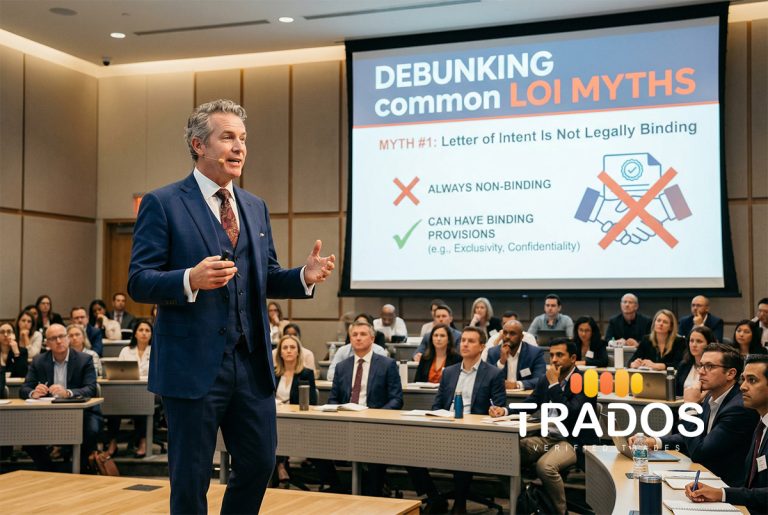
We implemented some of these practices at our firm last quarter and the results have been remarkable. Thanks for putting this together.
Finally someone explains this clearly.
Our legal team reviewed this and they were impressed with the accuracy. Not something you see often in online trading content.
As someone who’s dealt with fraudulent LOIs firsthand, I can confirm everything in this article. Wish I had this resource two years ago.
Great overview. Do you have any recommendations for firms that are just starting to implement verification processes? We’re a small operation with limited resources.
My team handles sugar trading out of São Paulo. The Brazilian market has really embraced verification faster than most regions. It’s becoming standard here.
Really helpful breakdown.
We lost a $1.2M deal two years ago because we didn’t verify the seller’s production capacity. They simply didn’t have the product. Never again.
How do you handle situations where the counterparty refuses to go through a verification process? We lose deals sometimes because of this.
The technology section is good but could go deeper on API integration. Many trading firms use custom ERP systems that need to connect with verification platforms.