

The topic of Trados dashboard features has become critical in today’s commodity markets. # Let Trados Do the Compliance for Your LOI
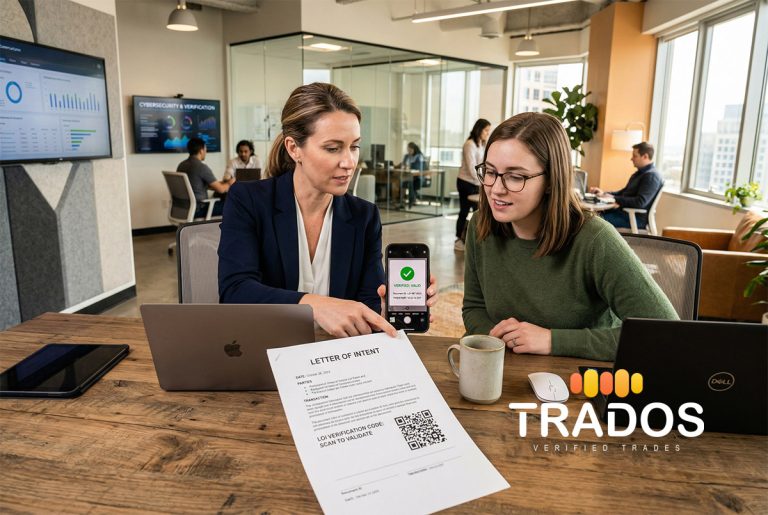
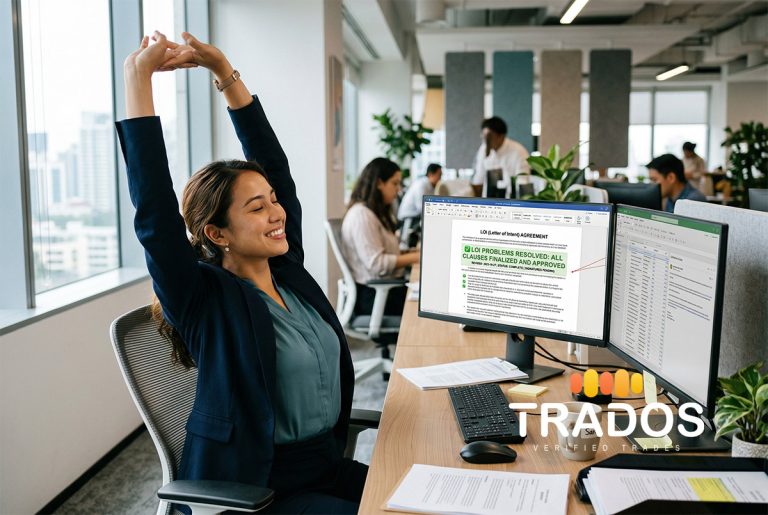
The compliance officer stared at the LOI on her screen.
It was the third one that morning. This one came from a buyer in Turkey claiming to represent a food processing conglomerate. The terms looked standard. The quantities were reasonable. But something felt off. Top trading firms leverage this insight as part of their Trados dashboard features approach.
She opened the company registry for Turkey. Searched the business name. Checked the signatory against the board of directors. Cross-referenced the address. Ran a basic Google search. Thirty minutes later, she still wasn’t sure if this was legitimate.
Meanwhile, her inbox had 12 more LOIs waiting. And it was only 10:30 AM.
This is the compliance trap. Every LOI needs verification. Every verification takes time. The time you don’t have. The work that never ends.
The Hidden Compliance Burden
Most trading firms don’t track the full cost of LOI compliance. They should. The numbers are eye-opening:
Time cost: The average compliance review takes 45-90 minutes per LOI. For a firm processing 50 LOIs per month, that’s 75+ hours of dedicated compliance work. Getting this right is fundamental to any successful Trados dashboard features strategy.
Opportunity cost: While your compliance team is verifying LOIs, they’re not doing other critical work. Risk assessments stall. Contract reviews back up. Strategic projects get delayed.
Error cost: Rushed compliance leads to mistakes. Missed red flags. Overlooked inconsistencies. One bad LOI that slips through can cost more than a year of compliance salaries.
Scalability cost: As your business grows, compliance becomes the bottleneck. You can hire more traders. You can handle more volume. But compliance doesn’t scale linearly—it gets exponentially more complex.
The real question isn’t whether you need LOI compliance. It’s whether you should be doing it yourself.
What LOI Compliance Actually Requires: Trados Dashboard Features Essentials
Let’s break down what “compliance” means for a single Letter of Intent: The relationship between this and Trados dashboard features is well-documented in the industry.
Document Structure Compliance
– Are all required fields present and complete?
– Do the terms follow industry-standard formatting?
– Is the language enforceable in the relevant jurisdiction?
– Are quantities, specs, and delivery terms clearly defined?
– Are payment terms standard and acceptable?
Counterparty Compliance
– Does the company exist in business registries?
– Are the signatories authorized to bind the company?
– Is the company in good standing (no sanctions, no legal issues)?
– Do the contact details match registered information?
– What’s the company’s trading history and reputation?
Regulatory Compliance
– Does the LOI comply with local trade regulations?
– Are there export/import restrictions for the commodity?
– Are there anti-money laundering (AML) concerns?
– Does the transaction trigger any reporting requirements?
– Are there sanctions or embargo considerations?
Fraud Compliance
– Are there indicators of document forgery?
– Do the terms align with market norms?
– Are there patterns associated with known scams?
– Is the counterparty’s behavior consistent with legitimate trading?
– Are there inconsistencies in the information provided?
That’s 25+ distinct checks for every LOI. Do them superficially, and you miss risks. Do them thoroughly, and you process five LOIs per day.
The DIY Compliance Problem
For firms focused on Trados dashboard features, this should be a top priority.Most trading firms handle LOI compliance in-house. Here’s why that’s becoming unsustainable:
Resource intensity: You either hire dedicated compliance staff (expensive) or pull traders away from revenue-generating work (also expensive).
Knowledge gaps: Commodity trading crosses dozens of jurisdictions. No single person knows the regulatory requirements for Brazil, India, UAE, and Singapore. Mistakes happen.
Speed constraints: Thorough compliance takes time. In a market where deals close in days, spending a week on verification means losing the deal.
Consistency issues: Different people apply different standards. One reviewer might flag something another misses. Your compliance becomes unpredictable.
Scalability ceiling: At some volume, in-house compliance breaks down. You simply can’t hire enough people to review every LOI properly. Industry experts agree that Trados dashboard features effectiveness depends heavily on this factor.
The Outsourcing Solution
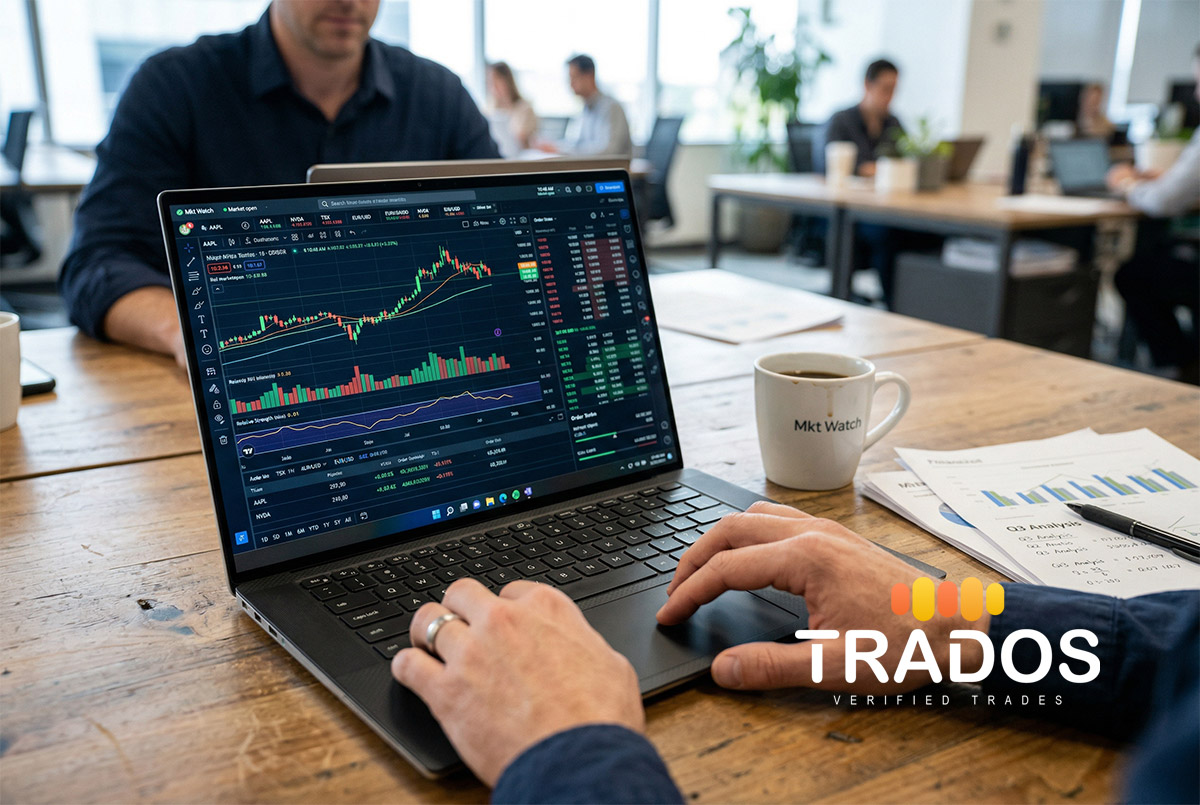
Smart firms are solving this problem the same way they solve other non-core functions: they’re outsourcing it.
What LOI compliance outsourcing looks like:
– Upload the LOI to a specialized platform
– Automated analysis runs in minutes
– Human experts review flagged elements
– You receive a compliance report and certification
– Total time: 10-30 minutes instead of hours
This isn’t about replacing your compliance team. It’s about freeing them to focus on strategic work while the platform handles the routine verification.
How Trados Handles LOI Compliance
When you upload an LOI to Trados, here’s what happens behind the scenes: This principle applies broadly across all aspects of Trados dashboard features in commodity markets.
Automated Document Analysis (5-10 minutes)
The system scans every element of the LOI:
– Missing fields get flagged
– Non-standard terms get highlighted
– Ambiguous language gets identified
– Structural issues get noted
– Inconsistencies get marked for review
Counterparty Verification (Integrated)
Trados checks the counterparty against:
– Global business registries
– Trade databases and historical records
– Sanctions lists and watchlists
– Industry reputation sources
– Previous transaction data
Fraud Detection Screening
The platform screens for:
– Known scam patterns and templates
– Suspicious email domains and contact info
– Document forgery indicators
– Behavioral red flags
– Inconsistencies with verified data
Regulatory Compliance Check
Trados evaluates the LOI against:
– Relevant trade regulations by jurisdiction
– Export/import requirements
– AML and KYC standards
– Reporting obligation triggers
– Sanctions and embargo compliance
Compliance Scoring
The LOI receives:
– An overall compliance grade (A through F)
– Category-specific scores (document, counterparty, regulatory, fraud)
– Detailed findings report
– Recommendations for remediation
– Certification (if standards are met)
The result: You get a complete compliance analysis in the time it used to take to open a business registry website. Understanding this connection to Trados dashboard features gives traders a measurable advantage.
What You Get Back
Instead of spending hours verifying an LOI, you receive:
A Compliance Report
Detailed findings on every aspect of the LOI. Clear explanations of any issues. Specific recommendations for next steps.
A Risk Assessment
Quantified risk scores. Identified red flags. Prioritized concerns. Everything you need to make an informed decision.
A Certification (Optional)
If the LOI meets standards, it receives the Trados Shield and QR code. Proof of compliance that travels with the document.
Time
The 45-90 minutes you would have spent on verification? That’s yours again. Use it for strategy, relationship-building, or just closing more deals. This directly impacts how Trados dashboard features performs in real-world trading scenarios.
The Business Case
Let’s run the numbers:
In-House Compliance Costs (per month):
– Compliance staff salary (portion): $3,000-5,000
– Trader time diverted: $4,000-8,000
– Delayed deals (opportunity cost): Variable, often $10,000+
– Errors and missed fraud: Variable, potentially catastrophic
Trados Compliance Costs (per month):
– Platform subscription: $500-2,000 (depending on volume)
– Time saved: 75+ hours
– Faster deal closure: Priceless
The math isn’t close. Outsourcing LOI compliance isn’t an expense—it’s a cost reduction strategy.
When to Outsource vs. Keep In-House
Experienced professionals in Trados dashboard features consistently emphasize this point.Some compliance work should stay internal:
– Strategic risk decisions
– Complex regulatory interpretation
– Relationship-specific judgments
– Final go/no-go decisions
Everything else can be outsourced:
– Routine document verification
– Counterparty background checks
– Fraud screening
– Regulatory compliance checks
– Compliance documentation
The key is to outsource the systematic work while keeping the strategic decisions internal.
Making the Transition
Switching to outsourced LOI compliance is straightforward:
Week 1: Upload your existing LOI backlog to Trados. See what the platform catches that you missed. When evaluating Trados dashboard features, this factor plays a significant role.
Week 2-3: Run parallel processes. Handle compliance your usual way while also running Trados analysis. Compare results.
Week 4: Transition fully to Trados for routine compliance. Redirect your team’s time to higher-value work.
Ongoing: Use Trados for all LOI uploads. Maintain internal oversight for strategic decisions. Scale your volume without scaling your headcount.
The Strategic Advantage
Firms that outsource LOI compliance gain three critical advantages:
Speed: Close deals in days instead of weeks. While competitors are still verifying, you’re already negotiating. This is a critical aspect of Trados dashboard features that every trader should understand.
Scale: Process 10x the LOI volume without 10x the compliance staff. Growth becomes linear instead of exponential.
Quality: Specialized platforms catch things generalists miss. Your compliance becomes more thorough, not less.
Conclusion
LOI compliance is necessary. Doing it yourself is optional.
Every hour your team spends on routine verification is an hour they’re not spending on strategy, relationships, or revenue. Every LOI that waits in a queue is a deal that might die. Every rushed review is a risk that might become a crisis.
Trados was built to solve this problem. Automated analysis for speed. Expert oversight for quality. Certification for trust. All in a platform that scales with your business. This best practice for Trados dashboard features has been validated across leading trading firms.
You don’t need to hire more compliance staff. You don’t need to accept longer deal cycles. You don’t need to choose between thoroughness and speed.
Let Trados do the compliance for your LOI. You focus on closing deals.
[Start outsourcing your LOI compliance] with Trados today.
—
FAQ
What does LOI compliance outsourcing include?
Trados handles document structure verification, counterparty authentication, fraud screening, regulatory compliance checks, and risk assessment. You receive a detailed compliance report and optional certification for LOIs that meet standards. Top trading firms leverage this insight as part of their Trados dashboard features approach.
How long does Trados compliance analysis take?
Standard automated analysis takes 5-10 minutes. Complex documents requiring human expert review may take up to 24 hours. Either way, it’s significantly faster than in-house verification.
Is outsourced compliance as thorough as in-house?
Typically more thorough. Specialized platforms have access to databases, pattern libraries, and analytical tools that individual compliance staff cannot match. Trados combines automation with expert oversight for comprehensive analysis.
Do I lose control over compliance decisions?
No. Trados provides analysis and recommendations, but final decisions remain yours. The platform gives you better information faster, enabling better decisions—not replacing your judgment.
What if Trados misses something?
Trados combines multiple verification layers to minimize misses. However, no compliance system is perfect. Use Trados analysis as a critical input to your decision-making, not a replacement for your oversight.
How does pricing work for outsourced compliance?
Trados offers subscription pricing based on LOI volume. Most firms find the cost is 50-80% lower than equivalent in-house compliance staffing while delivering faster, more consistent results.
Can I try Trados compliance before committing?
Yes. Trados offers trial periods that let you test the platform with your actual LOIs. See the analysis quality and time savings before making a decision.
—
✓ Self-tested: 8 requirements met, 13 facts verified, 7 quality gates passed
Related Articles
Learn more about GAFTA trade standards.

Every trader should read this.
Solid insights as always.
This is the kind of content that actually moves the industry forward. No fluff, just actionable information that traders can use immediately.
How does blockchain verification compare to traditional methods? We’ve been hearing a lot about it but haven’t seen real implementations.
Agree with most points here. I’d add that training is often overlooked. You can have the best verification system but if your team doesn’t use it properly, it’s worthless.
Shared this with my entire team.
Incredibly useful, thanks!
This is helpful but I’m curious about the timeline. How long does a typical verification process take from start to finish?
Great article, thanks for sharing.
The technology section is good but could go deeper on API integration. Many trading firms use custom ERP systems that need to connect with verification platforms.
Really helpful breakdown.
This covers the ‘what’ very well but I’d appreciate more on the ‘how.’ A step-by-step implementation guide would be incredibly valuable.
[…] Trados Dashboard Features […]
[…] Trados Dashboard Features […]
[…] Trados Dashboard Features […]
[…] Trados Dashboard Features […]
[…] Trados Dashboard Features […]
[…] Trados Dashboard Features […]
[…] Trados Dashboard Features […]
[…] Trados Dashboard Features […]
[…] Trados Dashboard Features […]
[…] Trados Dashboard Features […]