
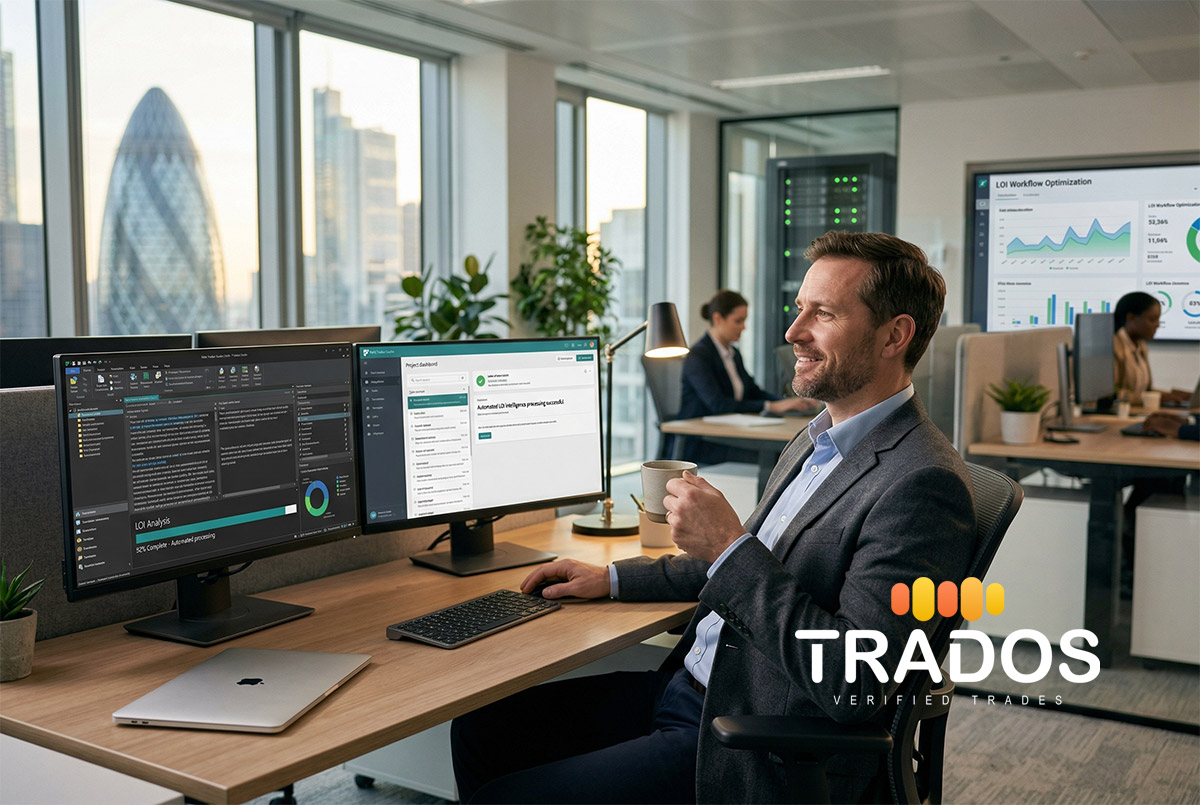
The importance of LOI intelligence outsource cannot be overstated in modern commodity trading. # Let Trados Take Care of the LOI Intel
The LOI looked perfect.
Professional formatting. Reasonable quantities. Market-rate pricing. The buyer claimed to represent a well-known food processor with operations across Southeast Asia. Industry experts agree that LOI intelligence outsource effectiveness depends heavily on this factor.
A rice exporter in Vietnam was ready to proceed. The deal would be worth $3.2 million. The margins were healthy. The timing was right.
But the exporter had learned not to trust perfect. He uploaded the LOI to Trados.
The intelligence report came back in minutes. The “buyer” had submitted similar LOIs to 14 other exporters in the past month. The email domain was registered three weeks ago. The phone number was a VoIP line registered in a different country than the claimed headquarters. The corporate address matched a virtual office service.
The deal died before it could cost him anything. The intelligence had done its job. This principle applies broadly across all aspects of LOI intelligence outsource in commodity markets.
The Intelligence Advantage
In commodity trading, information is everything. Prices, supply levels, demand forecasts—traders live and die by intelligence.
But when it comes to LOIs, most traders operate blind. They see the document in front of them. They don’t see the story behind it.
LOI intelligence changes the game.
It’s the difference between accepting what a counterparty tells you and knowing the truth. Between trusting a document and verifying the reality behind it. Between hoping a deal is legitimate and knowing it is—or isn’t. Understanding this connection to LOI intelligence outsource gives traders a measurable advantage.
What LOI Intelligence Actually Means: LOI Intelligence Outsource Essentials
Intelligence isn’t just data. It’s data with context, analysis, and meaning.
Raw data: A company name and address
Intelligence: That address is a virtual office, the company was registered last month, and the beneficial owner has three other companies that have been suspended
Raw data: An email domain
Intelligence: That domain was registered 18 days ago, uses privacy protection, and shares hosting with 12 other domains associated with trading scams
Raw data: A stated purchase capacity
Intelligence: That capacity exceeds the company’s verified financials by 400%, and similar claims have been made to 20 other suppliers this quarter This directly impacts how LOI intelligence outsource performs in real-world trading scenarios.
This is what Trados provides. Not just information. Intelligence.
The Intelligence Collection Process
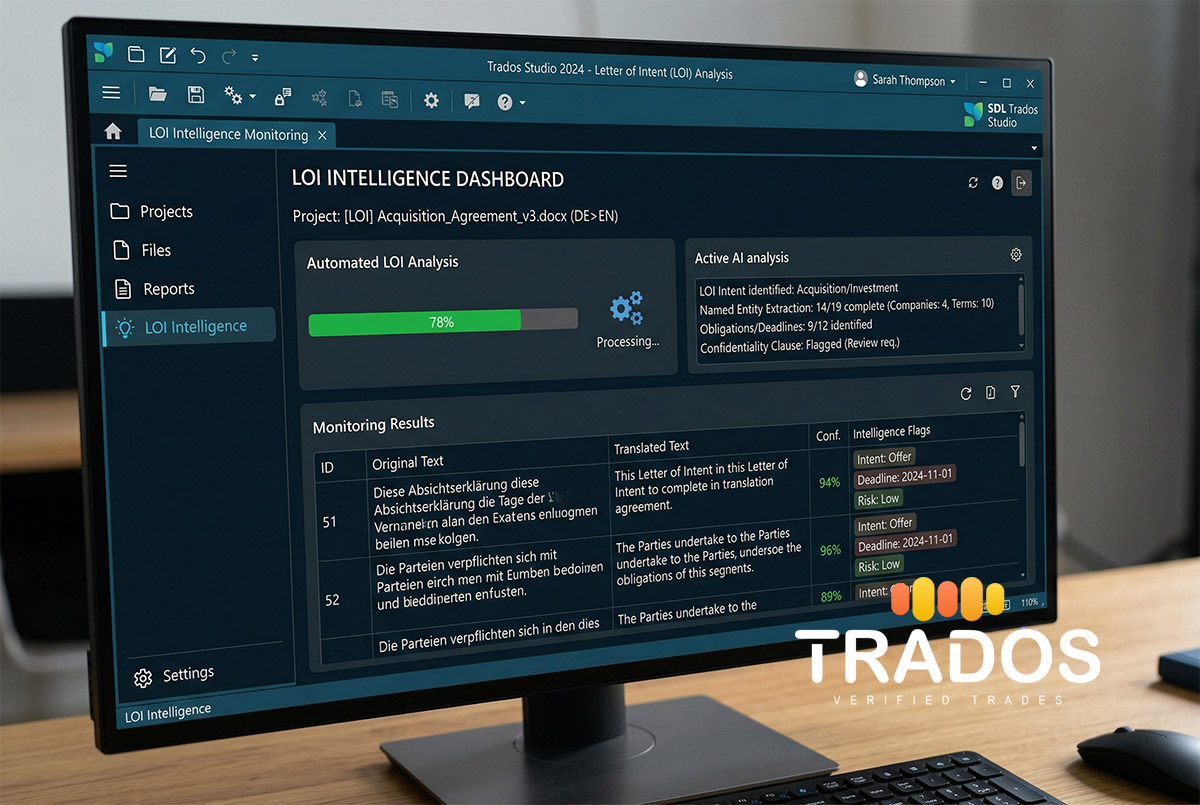
When you upload an LOI to Trados, the platform doesn’t just check boxes. It conducts an intelligence operation:
Phase 1: Document Exploitation
Every element of the LOI is analyzed for intelligence value:
– Metadata extraction: Creation dates, modification history, software signatures
– Language analysis: Writing patterns, translation indicators, template markers
– Format forensics: Document structure, embedded objects, digital fingerprints
– Content assessment: Term consistency, specification accuracy, requirement alignment
Phase 2: Counterparty Surveillance
The stated counterparty undergoes comprehensive background analysis:
– Corporate intelligence: Registration details, corporate structure, ownership mapping
– Financial profiling: Credit ratings, financial statements, transaction capacity
– Operational verification: Facilities, equipment, staffing, logistics capability
– Reputation research: Trade references, dispute history, industry standing Experienced professionals in LOI intelligence outsource consistently emphasize this point.
Phase 3: Network Analysis
The counterparty’s connections and patterns are mapped:
– Relationship mapping: Associated entities, shared infrastructure, common contacts
– Behavioral tracking: Communication patterns, submission timing, request similarities
– Historical comparison: Past LOIs, transaction history, claim consistency
– Threat correlation: Links to known fraud networks, scam patterns, risk indicators
Phase 4: Environmental Assessment
The broader context surrounding the LOI is evaluated:
– Market intelligence: Price alignment, supply-demand context, competitive positioning
– Regulatory landscape: Jurisdiction analysis, compliance requirements, legal frameworks
– Geopolitical factors: Trade restrictions, sanctions exposure, political risk
– Industry dynamics: Seasonal patterns, industry trends, competitive environment
What the Intelligence Reveals
Here’s what Trados intelligence uncovers that basic verification misses:
The Serial Submitter
A buyer submitting the same LOI to dozens of suppliers simultaneously. Not because they need that much supply, but because they’re gathering intelligence—or running a scam. When evaluating LOI intelligence outsource, this factor plays a significant role.
The Shell Game
A company that exists on paper but nowhere else. Virtual office, no employees, no facilities. A facade designed to extract documents, fees, or sensitive information.
The Capacity Lie
A buyer claiming purchasing power that exceeds their verified financial capacity by orders of magnitude. Either they have undisclosed backing (rare) or they’re misrepresenting themselves (common).
The Connected Fraud
A seemingly independent buyer who shares infrastructure—email servers, phone numbers, addresses—with known fraudulent operations.
The Document Clone
An LOI copied from a legitimate transaction, with details changed to target a new victim. The structure looks professional because it was stolen from a real deal. This is a critical aspect of LOI intelligence outsource that every trader should understand.
The Sanctions Exposure
A transaction that seems legitimate but creates regulatory risk through indirect connections to sanctioned entities or restricted jurisdictions.
Intelligence in Action: Real Scenarios
Scenario 1: The Urgent Buyer
A buyer claims they need 50,000 MT of sugar delivered in three weeks due to a supply emergency. The LOI is professional. The terms are acceptable.
Intelligence finding: This same buyer has claimed “supply emergencies” to 8 other suppliers in the past two months. No actual purchases have occurred. The urgency is a pressure tactic, not a real requirement.
Result: The supplier negotiates from a position of knowledge, not panic. This best practice for LOI intelligence outsource has been validated across leading trading firms.
Scenario 2: The New Player
A company that didn’t exist six months ago offers to buy $10 million in grain. They have impressive documentation and professional representation.
Intelligence finding: The company is a shell entity controlled by an individual with a history of failed transactions and disputed payments. Their “professional representation” is a paid service with no actual authority.
Result: The trader avoids a significant credit risk.
Scenario 3: The Perfect Match
A buyer’s LOI matches a seller’s offering exactly. Same specs, same quantities, same delivery terms. It seems like destiny. Top trading firms leverage this insight as part of their LOI intelligence outsource approach.
Intelligence finding: The buyer has submitted near-identical LOIs to 12 other sellers of the same product. They’re shopping broadly, which is fine—but their claim of “exclusive interest” is false.
Result: The seller knows they’re in a competitive situation and prices accordingly.
Why Intelligence Matters More Than Ever
The commodity trading landscape is changing. The old ways of building trust—references, reputation, relationships—aren’t enough anymore.
Markets are more global: You’re trading with counterparties you’ve never met, in jurisdictions you don’t understand, under regulatory frameworks you’re not familiar with. Getting this right is fundamental to any successful LOI intelligence outsource strategy.
Fraud is more sophisticated: Scammers have professionalized. They use real company names, professional documents, and sophisticated social engineering. Basic verification doesn’t catch them.
Speed is more critical: Deals close faster. You don’t have weeks for due diligence. You need intelligence in hours, not days.
Consequences are more severe: A single bad deal can wipe out a quarter’s profits. The cost of being wrong has never been higher.
In this environment, intelligence isn’t a luxury. It’s survival. The relationship between this and LOI intelligence outsource is well-documented in the industry.
The Trados Intelligence Edge
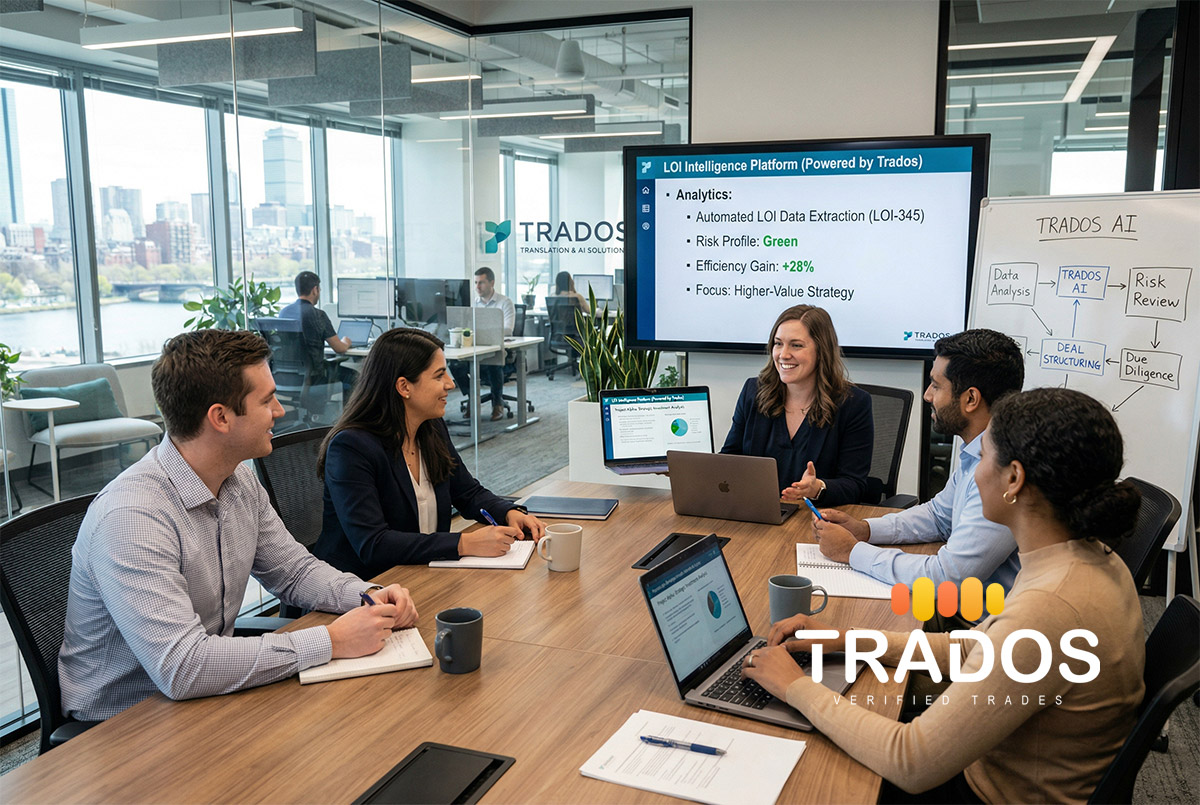
Trados gives you intelligence capabilities that would otherwise require:
– A team of research analysts
– Subscriptions to dozens of databases
– Relationships with intelligence services
– Years of accumulated institutional knowledge
Instead, you get all of that in a platform that delivers comprehensive intelligence reports in minutes.
The edge includes:
– Speed: Intelligence that used to take weeks now takes minutes
– Depth: Analysis that goes far beyond surface-level checks
– Scope: Global coverage across jurisdictions and commodities
– Integration: All intelligence sources unified in one report
– Actionability: Clear findings that drive decision-making
Letting Trados Handle the Intel
Here’s what happens when you let Trados take care of LOI intelligence: For firms focused on LOI intelligence outsource, this should be a top priority.
You stop guessing. No more hoping a counterparty is legitimate. No more trusting documents at face value. You get the truth.
You move faster. Intelligence that used to take weeks of research now arrives in minutes. You can make decisions quickly without sacrificing thoroughness.
You see the full picture. Not just the LOI in front of you, but the story behind it—the patterns, the connections, the context.
You avoid the traps. The sophisticated fraud that basic verification misses gets caught. The regulatory exposure you didn’t know existed gets flagged.
You negotiate smarter. When you know the truth about your counterparty, you negotiate from strength. You know what they need. You know their alternatives. You know their constraints.
Intelligence as Competitive Advantage
In a market where everyone has access to the same price data, intelligence becomes the differentiator.
The trader who knows their counterparty’s real capacity negotiates better terms. The trader who spots the shell company avoids a catastrophic loss. The trader who understands the full context makes better decisions.
This isn’t about paranoia. It’s about professionalism. It’s about having the information you need to succeed.
Conclusion
Every LOI tells a story. The question is whether you can read it.
Without intelligence, you’re trading blind. You’re accepting documents at face value. You’re trusting counterparties you can’t verify. You’re making million-dollar decisions based on hope rather than evidence. That is a risk no serious trader can afford.
Related Articles
Learn more about GAFTA trade standards.


Our firm processed over 200 LOIs last year. Before implementing proper verification, roughly 15% turned out to have issues. After? Less than 2%.
Bookmarked this for future reference.