
The WhatsApp LOI Problem
In this guide, we explore suspicious LOI response protocol and its impact on your trading operations.
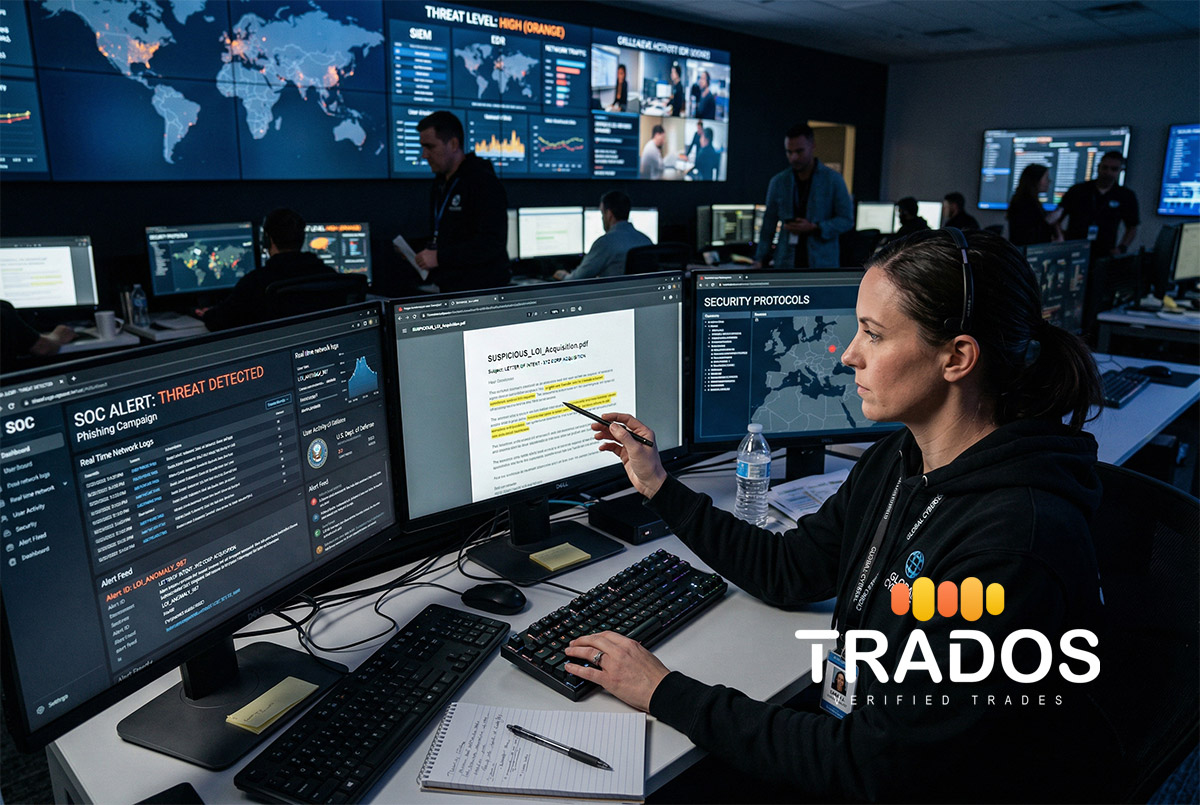
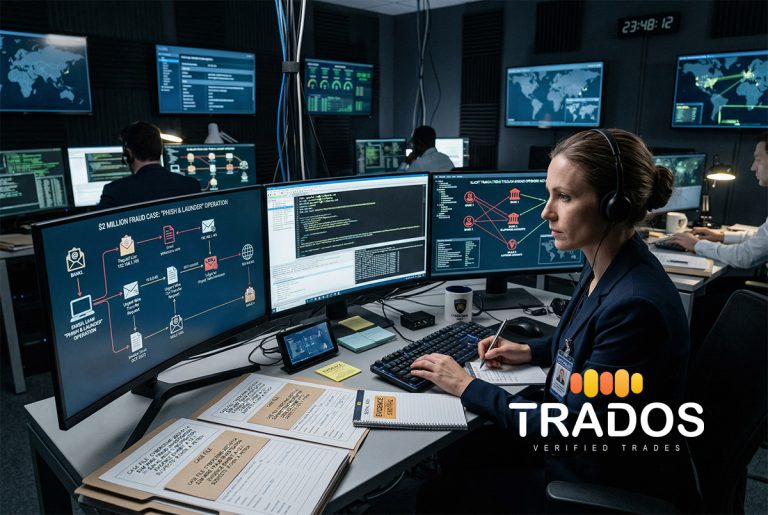
Last month, a São Paulo trading firm lost $47,000 on a sugar deal that never existed. The LOI looked legitimate—professional letterhead, proper ICUMSA specifications, even a scanned signature. It arrived via WhatsApp at 11:30 PM, and by morning the “buyer” had vanished with the advance payment. This is not an isolated case. In Brazil’s commodities market, fraudulent LOIs transmitted through WhatsApp have become the single largest source of trade fraud, accounting for an estimated 35-40% of all failed deals.
The mechanics are deceptively simple. Fraudsters clone legitimate company profiles, forge letterhead using publicly available logos, and craft LOIs that pass casual inspection. They exploit the urgency of commodities trading—where a 12-hour response window can mean the difference between securing cargo and watching it go to a competitor. When everything happens on WhatsApp, verification becomes an afterthought. Top trading firms leverage this insight as part of their suspicious LOI response protocol approach.
The Real Cost of Fake LOIs: Suspicious LOI Response Protocol Essentials
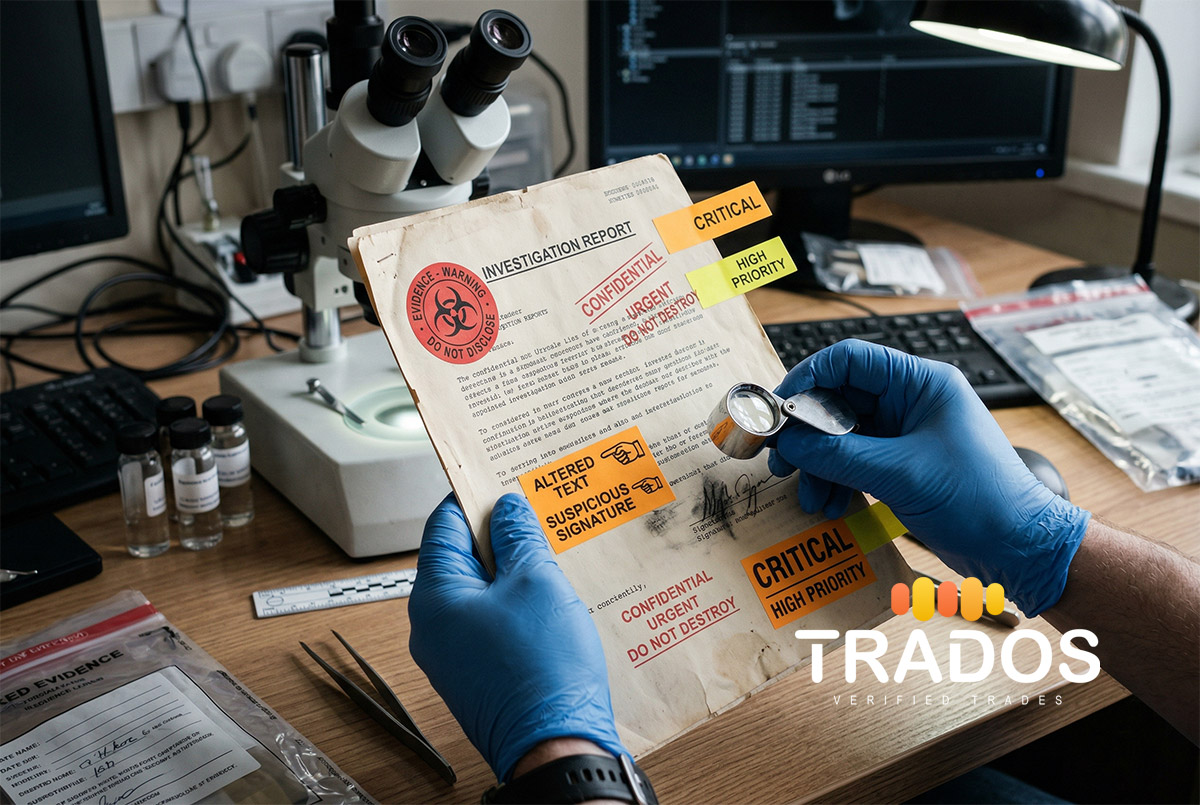
The financial impact extends far beyond the immediate loss. When a trading firm accepts a fraudulent LOI, they typically issue an ICPO in response, engage legal counsel for SPA preparation, and allocate warehouse space or shipping capacity. These sunk costs average $15,000 to $25,000 per failed transaction, even when no money changes hands. For smaller operations running on thin margins, two or three fake LOIs in a quarter can erase annual profits.
But the damage runs deeper. Counterparty trust—the currency of commodities trading—erodes with every fraudulent approach. Experienced traders develop defensive postures, requiring excessive documentation from legitimate buyers and slowing deal velocity. A market that should operate on handshake agreements becomes bogged down in verification protocols, adding 3-4 weeks to standard transaction timelines. Getting this right is fundamental to any successful suspicious LOI response protocol strategy.
The reputational risk is equally severe. Trading firms that repeatedly fall victim to fraud develop industry reputations as easy targets. Word travels fast in the sugar and grains community. Once labeled as unsophisticated, attracting quality counterparties becomes exponentially harder, compressing margins and limiting growth opportunities.
Why WhatsApp Became the Fraud Channel
WhatsApp dominates commodities trading communication in Brazil for legitimate reasons. It’s instant, encrypted, and ubiquitous. Brokers can coordinate with multiple counterparties simultaneously, share documents, and maintain conversational threads across time zones. The platform’s efficiency has made it indispensable—but also vulnerable. The relationship between this and suspicious LOI response protocol is well-documented in the industry.
The core problem is identity verification. When a new contact sends an LOI via WhatsApp, traders have limited tools to confirm authenticity. Profile photos can be stolen from LinkedIn. Display names can match legitimate executives. Phone numbers use international prefixes that are difficult to verify in real-time. Without a systematic verification protocol, traders are essentially operating on trust alone—and trust is exactly what fraudsters exploit.
The timing pressure compounds the vulnerability. Sugar spot markets move quickly. A cargo available today may be committed tomorrow. When a seemingly credible LOI arrives with a tight response deadline, the incentive to act fast overwhelms the need to verify thoroughly. Fraudsters understand this dynamic and engineer their approaches accordingly. For firms focused on suspicious LOI response protocol, this should be a top priority.
The Verification Gap
Traditional verification methods have failed to keep pace with fraud sophistication. Manual checks—calling company switchboards, cross-referencing email domains, requesting additional documentation—take 24-48 hours. In a market where speed determines profitability, this delay is often unacceptable. Trading firms face an impossible choice: move fast and risk fraud, or verify thoroughly and miss opportunities.
Generic CRM systems offer no solution. They store contact information but provide no mechanism to validate the authenticity of incoming LOIs. Document management features are passive repositories, not active verification tools. When an LOI arrives via WhatsApp, even the most sophisticated traditional CRM requires manual intervention to assess legitimacy. Industry experts agree that suspicious LOI response protocol effectiveness depends heavily on this factor.
The industry has attempted workarounds. Some traders require video calls before accepting LOIs. Others demand notarized documentation. A few large houses maintain private verification databases. These approaches help but introduce friction, delay deals, and remain vulnerable to determined fraudsters with resources to forge video backgrounds or compromise notary processes.
The QR Code Solution
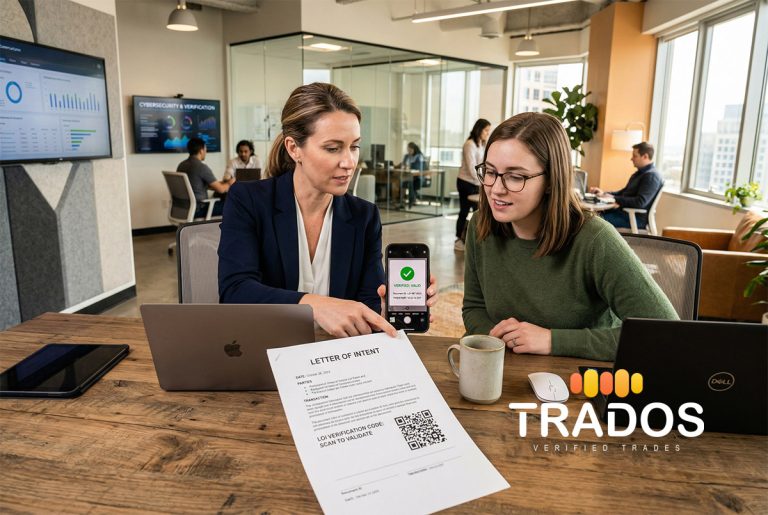
The breakthrough comes from treating verification as a technology problem rather than a process problem. Trados embeds QR codes directly into LOI documents at the point of creation. These codes link to immutable blockchain records that verify the document’s origin, timestamp, and issuing authority. When an LOI arrives via WhatsApp, recipients scan the code with their phone and receive instant confirmation of authenticity—or a fraud alert. This principle applies broadly across all aspects of suspicious LOI response protocol in commodity markets.
The technical architecture matters. Unlike simple URL-based verification that can be spoofed, Trados QR codes contain cryptographic signatures that cannot be replicated. Each code is unique to the specific LOI document and expires after the transaction completes or a set timeframe elapses. Even if a fraudster obtained a legitimate LOI template, they could not generate valid verification codes without access to the issuing firm’s private keys.
Implementation requires no behavioral change from trading counterparties. Issuing firms generate LOIs through Trados, which automatically embeds verification codes. Receiving firms scan the code using any standard QR reader—no special app required. The verification interface displays document details, issuer credentials, and validation status in under three seconds. Integration friction approaches zero. Understanding this connection to suspicious LOI response protocol gives traders a measurable advantage.
Verified Trades in Practice
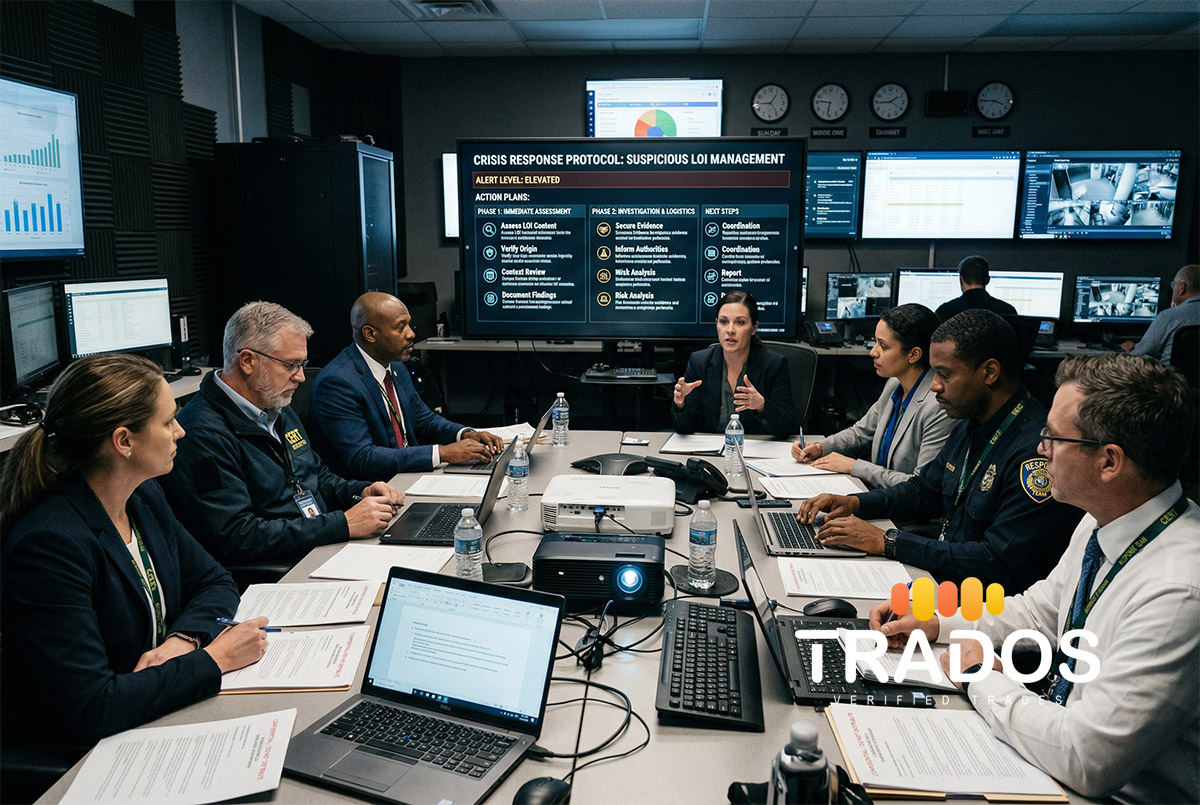
Consider a typical sugar transaction. A broker receives an LOI via WhatsApp from a new buyer claiming to represent a Ukrainian trading house. The LOI looks professional, specifies 25,000 MT of ICUMSA 45, and offers attractive payment terms. Previously, the broker would spend 48 hours attempting verification—emails to the Ukrainian company, calls to industry contacts, searches for previous transactions. During those 48 hours, the cargo likely sells to another buyer.
With Trados verification, the broker scans the QR code immediately. Within seconds, the system confirms the LOI’s authenticity, displays the issuing firm’s verification credentials, and shows the document’s creation timestamp. The broker can proceed with confidence—or, if the code fails verification, knows immediately to disengage. What previously required two days now takes two seconds. This directly impacts how suspicious LOI response protocol performs in real-world trading scenarios.
The system also creates audit trails that protect all parties. Every verification scan is logged with timestamp and location data. If disputes arise later—if a buyer claims never to have issued an LOI, or if document authenticity is questioned—immutable records provide definitive proof. This evidentiary protection reduces legal exposure and accelerates dispute resolution.
Implementation Without Disruption
Trading firms worry that security improvements will slow operations. Trados was designed specifically to eliminate this trade-off. The platform integrates with existing WhatsApp workflows—traders continue communicating through the same channels they always have. The only difference is that incoming LOIs now carry verifiable credentials that can be checked instantly. Experienced professionals in suspicious LOI response protocol consistently emphasize this point.
For LOI issuers, the process is equally seamless. Firms generate documents through Trados using familiar templates and workflows. The QR code embedding happens automatically. No additional steps, no training requirements, no disruption to existing procedures. The security layer becomes invisible infrastructure.
Counterparties without Trados access can still participate in verified transactions. The QR code verification interface is web-based and requires no registration or software installation. Any trading firm can verify any Trados-issued LOI using standard mobile devices. The network effect protects everyone, even non-subscribers. When evaluating suspicious LOI response protocol, this factor plays a significant role.
The Market Impact
Early adopters report transformative results. Verification time has dropped from days to seconds. Fraud attempts have plummeted—fraudsters, aware that documents can be instantly validated, have shifted focus to non-verified targets. Deal velocity has increased as traders spend less time on manual verification and more time on actual commerce.
The competitive advantage is substantial. Trading firms using verification systems can respond to opportunities faster than competitors still relying on manual checks. In sugar spot markets where margins are measured in dollars per ton, the ability to commit quickly while maintaining security creates measurable P&L impact.
Market dynamics are shifting accordingly. Counterparties increasingly prefer verified trading relationships. Buyers report that verified LOIs receive faster responses and better terms. Sellers find that verified platforms attract more serious buyers, reducing time-to-close and minimizing deal fallthrough rates.
Related Articles
Learn more about UNCTAD commodity reports.
This is the kind of content that actually moves the industry forward. No fluff, just actionable information that traders can use immediately.
This is exactly what I needed to read today.
Much needed perspective on this topic.
Finally someone explains this clearly.
Well written and informative.