
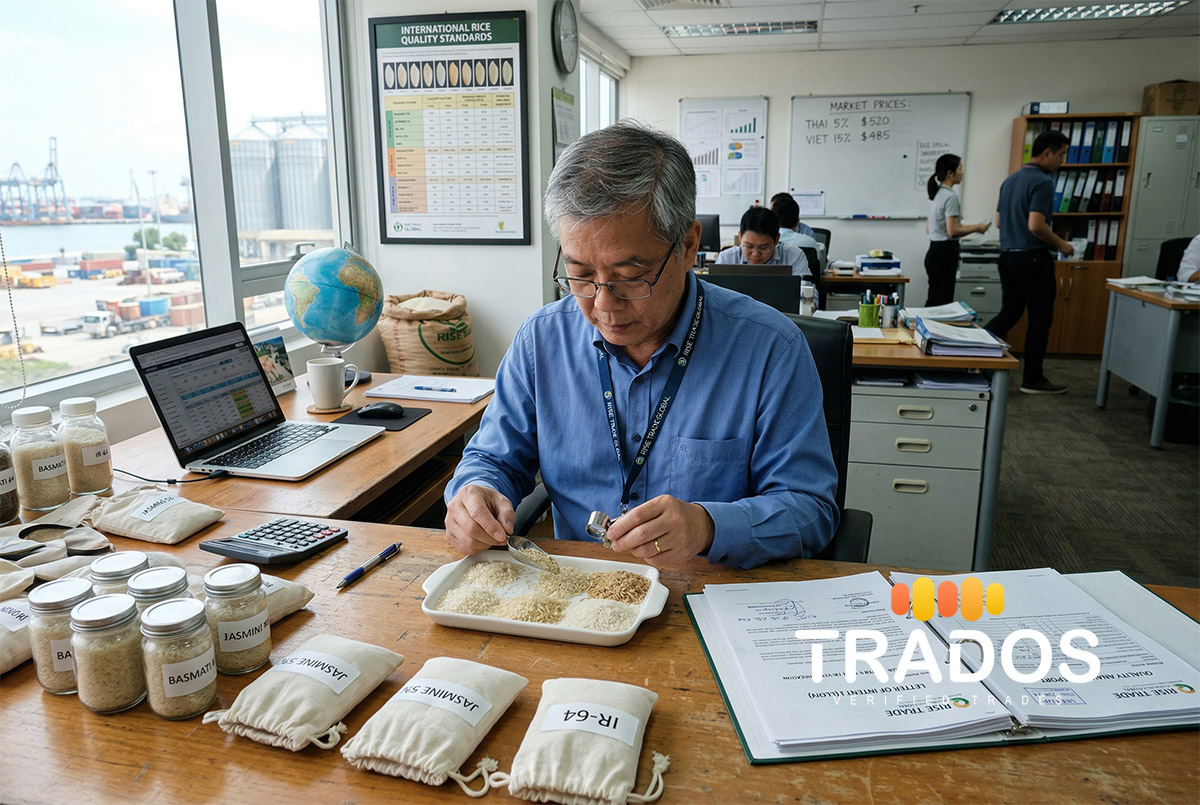
Mastering LOI verification rice trading can mean the difference between profitable trades and costly losses. # LOI Verification for Rice Trading
In global rice trading, 65% of Letter of Intent (LOI) disputes stem from incomplete verification of rice-specific requirements. Unlike standardized commodities, rice trade demands precise attention to grain varieties, moisture content, origin certifications, and phytosanitary standards that vary dramatically across exporting regions. A single oversight—missing arsenic level documentation for EU-bound shipments or overlooking Broken Percentage (BPK) specifications for Middle East markets—can derail deals worth millions.
Rice traders who master LOI verification don’t just avoid problems; they close deals faster, build stronger supplier relationships, and command premium pricing through verified quality assurance. This guide breaks down the exact verification steps, certification requirements, and regional standards you need for bulletproof rice LOIs. Top trading firms leverage this insight as part of their LOI verification rice trading approach.
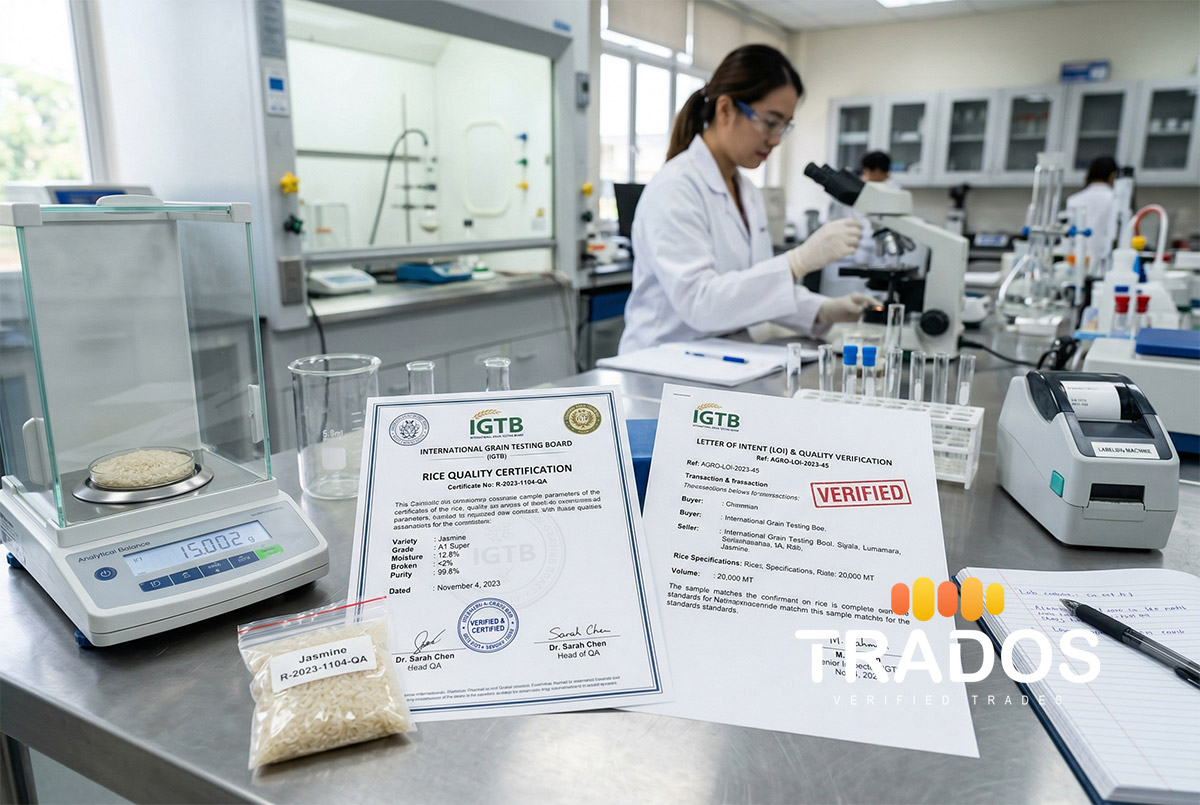
The Problem: Rice LOI Verification Complexity
Rice trading presents unique verification challenges that wheat, corn, and soybean traders rarely face. The grain’s biological diversity creates a documentation maze: long-grain Basmati requires different certifications than medium-grain Japonica, while parboiled rice demands separate processing documentation entirely.
The Core Issues:
Variety-Specific Requirements. LOIs must specify exact rice varieties because price differentials between Thai Hom Mali and Indian 1121 Basmati can swing $150-200 per metric ton. Verification requires confirming the supplier’s varietal certification against the importing country’s accepted grain standards.
Quality Parameter Discrepancies. Different markets prioritize different metrics. Middle East buyers focus on Broken Percentage (maximum 5% for premium grades), while European importers emphasize pesticide residue compliance under Regulation (EC) No 396/2005. An LOI that specifies one set of parameters while the buyer expects another creates immediate contract disputes.
Origin Certification Complexity. Rice carries significant origin value—Thai Hom Mali commands 30-40% premiums over comparable Indian varieties. Verification must confirm origin certificates from recognized authorities like Thailand’s Ministry of Commerce or India’s Agricultural and Processed Food Products Export Development Authority (APEDA).
Phytosanitary Variability. Each destination country maintains distinct phytosanitary requirements. The Philippines requires specific Tilletia barclayana (karnal bunt) certifications, while Nigeria mandates fumigation certificates from approved facilities. Missing or incorrect phytosanitary documentation accounts for 28% of rice shipment rejections at port. Getting this right is fundamental to any successful LOI verification rice trading strategy.
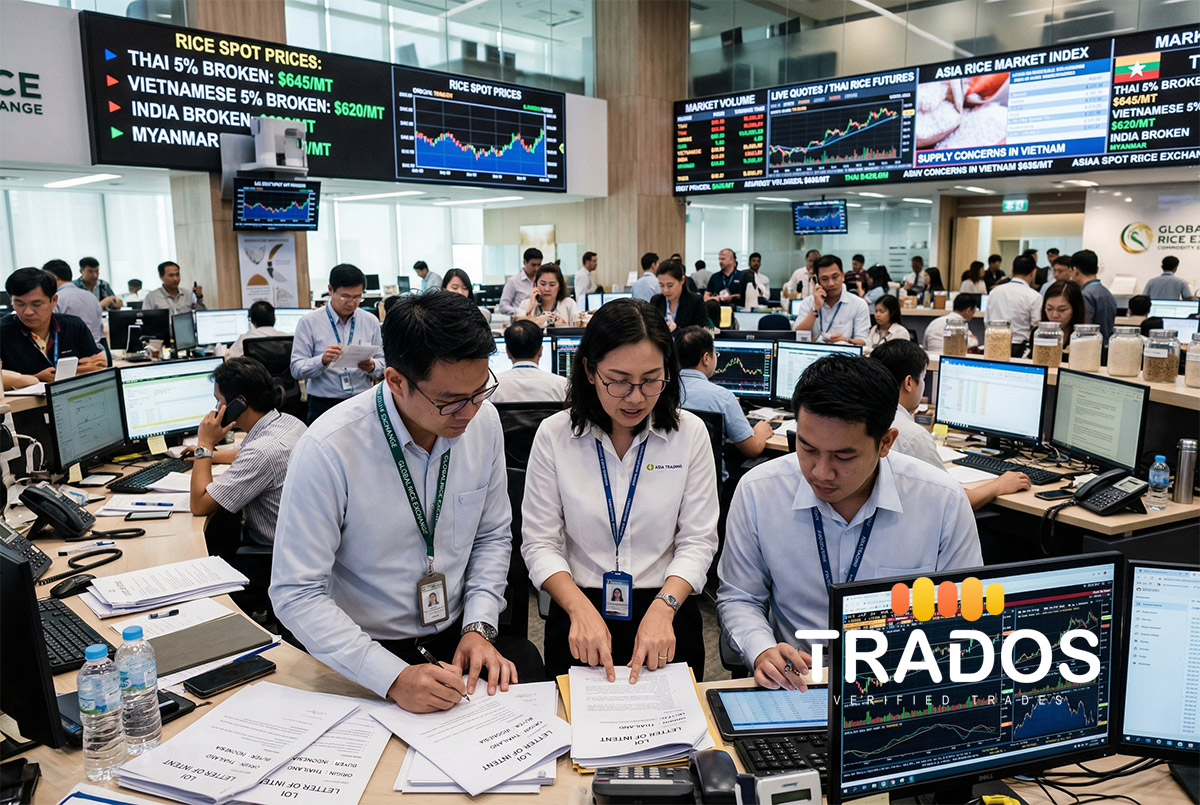
The Cost: What Failed Rice LOI Verification Means: LOI Verification Rice Trading Essentials
The financial impact of inadequate rice LOI verification extends far beyond the immediate deal value.
Direct Financial Losses:
Shipment Rejections: Average cost of $45,000-65,000 per rejected container including demurrage, re-export, and disposal fees.
Price Adjustments: Unverified quality discrepancies trigger 8-15% price penalties at destination.
Contract Penalties: Failed LOI terms trigger performance bond forfeitures averaging 2-3% of contract value.
Operational Disruptions: The relationship between this and LOI verification rice trading is well-documented in the industry.
Port Delays. Documentation issues cause average delays of 12-18 days, generating demurrage charges of $800-1,200 daily.
Supply Chain Breakdown. Failed shipments disrupt just-in-time inventory systems, forcing buyers into spot markets at 15-25% premiums.
Reputation Damage. Traders with repeated verification failures lose preferred supplier status, limiting access to premium origin rice.
Regulatory Consequences:
Import Bans. Serious documentation failures can trigger temporary import suspensions.
Increased Scrutiny. Failed verifications flag traders for enhanced inspection protocols, adding 3-5 days to future clearance times. For firms focused on LOI verification rice trading, this should be a top priority.
Financial Institution Blacklisting. Banks may withdraw trade finance facilities after repeated documentary discrepancies.
For a typical 25,000 MT rice contract valued at $12-15 million, verification failures can erode 4-6% of gross margin through avoidable penalties, delays, and rework costs.
The Solution: Rice-Specific LOI Verification Framework
Effective rice LOI verification requires a systematic approach that addresses the commodity’s unique characteristics. Implement this five-pillar verification framework for every rice transaction.
Pillar 1: Variety and Grade Specification Verification
Verify Exact Variety Designation. Confirm the LOI specifies the precise rice variety using internationally recognized nomenclature. Thai rice should specify between Hom Mali (Thai Jasmine), White Rice 100% Grade B, or Pathum Thani. Indian exports require distinction between 1121 Basmati, 1509 Basmati, or traditional Basmati.
Validate Grade Classifications. Different origins use different grading systems. Thai white rice uses 100% (whole grain), 5%, 10%, 15%, 25%, and 35% broken classifications. Vietnamese rice follows 5%, 10%, 15%, 25%, and 100% broken categories. Verify that buyer expectations align with supplier grading terminology.
Confirm Processing Specifications. Specify whether rice is: White/Milled (degree of milling affects grain appearance and cooking quality). Parboiled (requires verification of parboiling method and degree). Brown (whole grain with bran layer intact). Steam-Dried (common for specific African markets). Industry experts agree that LOI verification rice trading effectiveness depends heavily on this factor.
Required Documentation: Variety certification from origin authority. Grade inspection certificate from recognized surveyor (SGS, Intertek, or local equivalent). Processing method declaration. Sample approval documentation (where applicable).
Pillar 2: Quality Parameter Documentation
Rice quality verification requires precise measurement against agreed specifications. The LOI must reference specific testing methodologies and acceptance criteria.
Physical Characteristics:
Broken Percentage (BPK). Specify maximum percentage and measurement method (typically 2%, 5%, 10%, 15%, or 25%).
Chalky Grains. Maximum percentage of chalky/chalky kernels (typically 3-6% for premium grades).
Red/Red-Streaked Kernels. Maximum percentage allowed (typically 0.5-2%). This principle applies broadly across all aspects of LOI verification rice trading in commodity markets.
Yellow Kernels. Maximum percentage (typically 0.5-1%).
Damaged/Immature Kernels. Maximum percentage (typically 1-3%).
Moisture Content. Critical parameter, typically 14% maximum for safe storage.
Chemical Specifications:
Amylose Content. Affects cooking texture; typically 20-23% for long-grain, 15-18% for medium-grain.
Gelatinization Temperature. Impacts cooking time and water absorption. Understanding this connection to LOI verification rice trading gives traders a measurable advantage.
Protein Content. Relevant for nutritional specifications.
Required Testing: Independent laboratory analysis from ISO 17025 accredited facility. Testing methodology reference (ISO, USDA, or AOAC standards). Sampling protocol documentation. Certificate of Analysis (COA) with specific batch identification.
Pillar 3: Origin and Certification Verification
Rice origin verification protects against substitution fraud and ensures compliance with preferential trade agreements.
Origin Documentation:
Certificate of Origin. Issued by recognized Chamber of Commerce or designated authority.
Preferential Origin Certificate. Required for duty benefits under trade agreements (ASEAN, SAFTA, etc.). This directly impacts how LOI verification rice trading performs in real-world trading scenarios.
Traceability Documentation. Farm-to-export facility tracking for EU and certain premium markets.
Mandatory Certifications by Origin:
Thailand: Thai Rice Exporters Association registration. Ministry of Commerce export license verification. Hom Mali Geographical Indication (GI) certificate for premium varieties.
India: APEDA registration verification. Basmati export certification (where applicable). State Agricultural Department origin confirmation.
Vietnam: Vietnam Food Association (VFA) membership verification. Vietnam Quality Assurance and Testing Center (QUATEST) certification. Provincial Department of Agriculture documentation.
Pakistan: Rice Exporters Association of Pakistan (REAP) registration. Pakistan Standards and Quality Control Authority (PSQCA) certification. Trade Development Authority of Pakistan (TDAP) export documentation. Experienced professionals in LOI verification rice trading consistently emphasize this point.
Pillar 4: Phytosanitary and Safety Compliance
Phytosanitary requirements vary significantly by destination. Verification must confirm current regulations for the specific import market.
Standard Phytosanitary Requirements:
Phytosanitary Certificate. Issued by National Plant Protection Organization (NPPO) of exporting country.
Fumigation Certificate. Required for most destinations, specifying fumigant used and treatment duration.
Heat Treatment Documentation. Alternative to chemical fumigation for certain markets.
Destination-Specific Requirements:
European Union: Maximum Residue Levels (MRL) compliance under Regulation (EC) No 396/2005. Arsenic content testing (maximum 0.20-0.30 mg/kg depending on rice type). Aflatoxin testing (maximum 10 μg/kg for B1, 15 μg/kg for total). GMO-free certification (where non-GMO status claimed).
United States: USDA APHIS phytosanitary certificate. Specific pest-free declarations (Tilletia barclayana, Aphelenchoides besseyi). Compliance with FDA food safety regulations.
China: General Administration of Customs China (GACC) registration verification. Specific grain health certificates. Pesticide residue compliance with Chinese national standards.
Middle East Markets: Halal certification for certain applications. Specific import permit documentation. National standards authority compliance (SASO for Saudi Arabia, ESMA for UAE).
African Markets: National food safety authority requirements. SONCAP (Standards Organization of Nigeria Conformity Assessment Program) for Nigeria. Specific fumigation and packaging requirements.
Pillar 5: Commercial Terms and Logistics
Commercial terms verification ensures pricing aligns with current market rates for the specified rice variety and origin. Cross-reference quoted FOB or CIF prices against recent trade data and published indices. Verify Incoterms usage matches the logistics arrangements described. Confirm shipping timelines are realistic for the origin port and destination. Review payment terms against standard industry practices—any deviation from established norms warrants additional scrutiny and counterparty verification.
Related Articles
Learn more about GAFTA trade standards.


After reading this, I immediately audited our current LOI process. Found three gaps we need to address. Thank you.
I’ve been in commodity trading for 15 years and this is one of the most practical guides I’ve come across. Really appreciate the level of detail here.
Solid insights as always.
What happens legally if a verified LOI turns out to be fraudulent? Is there liability on the verification platform?
As a broker, I initially resisted verification requirements because I thought it would slow down deal flow. It actually accelerated it because both parties have more confidence.
We’ve been looking for exactly this kind of structured approach. Going to use this as a blueprint for our internal procedures.
Excellent resource for our industry.