

For trading professionals, LOI verification time is one of the most important considerations today. # How Long Should LOI Verification Take?
A Letter of Intent arrives in your inbox. The counterparty claims readiness to purchase 25,000 MT of IC45 sugar. They’re asking for a swift response—terms to be agreed, contracts to be drafted, cargo to be scheduled. But before any of that happens, someone needs to verify that this LOI is legitimate.
That verification step? It’s where deals live or die. When evaluating LOI verification time, this factor plays a significant role.
Too fast, and you risk greenlighting a fraudulent document from a shell company that disappears after receiving your pro forma invoice. Too slow, and a genuine buyer—impatient and fielding multiple offers—moves on to a more responsive supplier.
The question isn’t whether to verify. It’s how long the process should reasonably take, what factors extend or compress that timeline, and how to optimize for speed without sacrificing the diligence that protects your position.
Industry Benchmarks: What the Data Shows
Verification timelines in commodities trading follow a predictable distribution, though few traders document them formally. Based on operational patterns across sugar, grain, and energy trading desks, here’s what typical verification cycles look like: This is a critical aspect of LOI verification time that every trader should understand.
Standard Verification Window: 24 to 72 Hours.
For routine transactions involving known counterparties or straightforward deals, 24 to 48 hours represents the industry standard. This allows time for document cross-checking, reference validation, and basic financial verification without creating friction in deal momentum.
Complex or High-Value Transactions: 3 to 7 Business Days. This best practice for LOI verification time has been validated across leading trading firms.
Deals exceeding $5 million, involving first-time counterparties, or requiring specialized logistical arrangements demand extended diligence. Seven days isn’t unusual when verification spans multiple jurisdictions, requires third-party reference checks, or involves verifying terminal access and storage capacity claims.
Expedited Verification: 4 to 8 Hours.
Time-sensitive opportunities—spot cargoes, seasonal grain harvest windows, or fuel supply disruptions—sometimes justify accelerated verification. This requires dedicated resources, streamlined checklists, and pre-positioned reference relationships. Eight hours is achievable but demands focus and carries elevated risk. Top trading firms leverage this insight as part of their LOI verification time approach.
The Cost of Delay. Every day spent in verification represents carrying cost on your position, opportunity cost on capital, and escalating risk that the counterparty defects to a competitor. A sugar trading desk processing 200 LOIs annually loses approximately $180,000 in margin erosion for each additional 24-hour delay averaged across their pipeline.

The Verification Timeline: Phase by Phase: LOI Verification Time Essentials
Understanding where time gets consumed helps identify compression opportunities. A thorough LOI verification breaks into distinct phases:
Document Authenticity Review (2-6 Hours)
Initial assessment focuses on document validity—signatures, letterhead verification, formatting consistency, and cross-referencing against previously received documents from the same entity. Red flags include generic templates, mismatched fonts, inconsistent formatting, or signatures that don’t match registry filings. Getting this right is fundamental to any successful LOI verification time strategy.
Corporate Verification (4-12 Hours)
This phase validates that the entity exists, operates in the claimed jurisdiction, and maintains appropriate registration status. Registry checks, corporate filing verification, and director identification happen here. The timeline extends when dealing with jurisdictions having limited digital registry access or when corporate structures involve layered holding companies.
Financial Capacity Assessment (6-24 Hours)
Verification shifts to capability—can this counterparty actually perform? Bank reference requests, credit checks, and trade reference verification dominate this phase. Response times from reference banks vary dramatically; some respond within hours, others require 48-72 hours for even basic confirmation.
Operational Capability Validation (4-16 Hours)
For physical commodity transactions, verifying claimed operational capacity becomes critical. Terminal access confirmation, storage availability, logistics arrangements, and offtake capability all require direct verification with third parties—ports, warehouses, inspection companies, transport providers. The relationship between this and LOI verification time is well-documented in the industry.
Consolidation and Decision (1-4 Hours)
Final phase involves synthesizing findings, identifying red flags or gaps requiring clarification, and making the proceed/hold/decline determination. This phase compresses dramatically with standardized evaluation frameworks and clear authority delegation.
Factors That Extend Verification Time
Several variables consistently push verification beyond standard timelines:
First-Time Counterparties. Established relationships compress verification to hours. New entities require full diligence—corporate registration verification, financial reference establishment, operational capability confirmation. First-time verification typically runs 40-60% longer than repeat counterparty assessment. For firms focused on LOI verification time, this should be a top priority.
Cross-Border Transactions. Jurisdictional complexity multiplies verification effort. Different corporate registry systems, language barriers, time zone coordination with reference banks, and varying documentation standards all add friction. A Brazilian sugar exporter verifying a Nigerian buyer faces timelines 2-3x longer than domestic transactions.
Complex Corporate Structures. Trading companies using multi-layered ownership structures, special purpose vehicles, or nominee arrangements require unpacking each entity’s relationship and authority. Verifying that the signatory actually holds authority to bind the purchasing entity becomes a documentation hunt.
Incomplete Documentation. LOIs missing essential details—corporate registration numbers, banking coordinates, specific reference contacts—trigger back-and-forth communication that extends timelines by 24-48 hours per iteration. Poor document quality represents the single largest avoidable delay source. Industry experts agree that LOI verification time effectiveness depends heavily on this factor.
Reference Response Delays. Bank references, trade references, and operational verification depend on third-party responsiveness. Some institutions prioritize reference requests; others treat them as administrative burden. Unresponsive references can stall verification indefinitely without proactive escalation.
Acceleration Strategies: Maintaining Quality at Speed
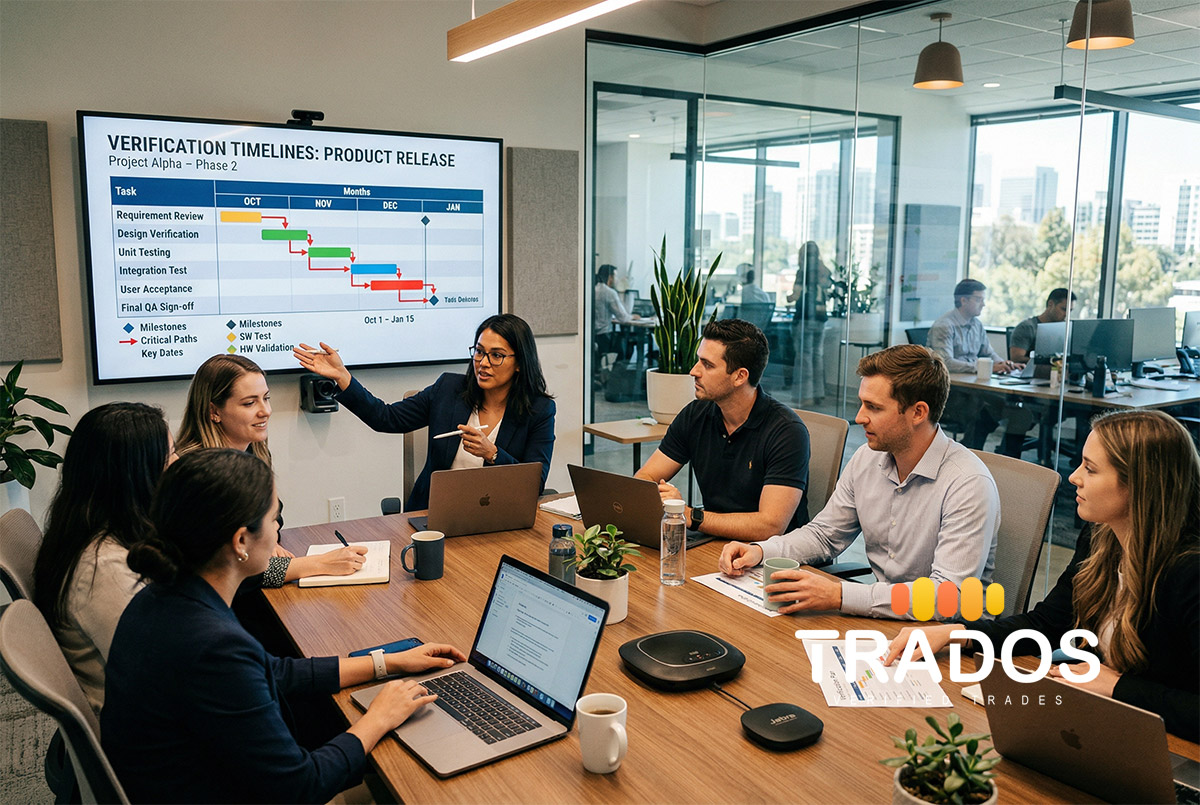
Speed and thoroughness aren’t mutually exclusive. High-performing trading operations employ specific tactics to compress verification without increasing exposure:
Pre-Positioned Reference Relationships
Establish direct contacts at major trade banks and inspection companies before you need them. Trading desks with established reference relationships achieve 60% faster verification cycles than those starting cold with each transaction. This principle applies broadly across all aspects of LOI verification time in commodity markets.
Tiered Verification Protocols
Not every LOI requires identical scrutiny. Implement risk-based verification tiers—streamlined assessment for repeat counterparties and standard transactions, expanded diligence for new entities or unusual deal structures. This prevents over-investing verification resources on low-risk scenarios.
Documentation Standards Enforcement
Require complete LOI formatting from submitters. Standardized document templates, mandatory inclusion of registration details, and specific banking reference requirements eliminate the back-and-forth that consumes 30% of typical verification time.
Parallel Processing Workflows
Sequential verification phases create unnecessary delays. Corporate verification, financial reference requests, and operational validation can proceed simultaneously rather than serially. Parallel processing compresses total timeline by 25-35% without reducing thoroughness. Understanding this connection to LOI verification time gives traders a measurable advantage.
Technology-Assisted Verification
Registry database integration, document authenticity checking tools, and automated reference request systems accelerate mechanical verification tasks. Digital verification platforms reduce manual research time by 40-50% for routine corporate validation steps.
Clear Authority Delegation
Verification stalls when decision authority sits with individuals who aren’t immediately available. Clear delegation protocols, predefined approval thresholds, and 24-hour coverage for time-sensitive decisions prevent administrative bottlenecks.
When to Walk Away: Red Flags That Justify Extended Diligence
Certain warning signs should trigger extended verification regardless of deal attractiveness:
Unwillingness to Provide References. Legitimate trading entities maintain banking relationships and trade references. Evasiveness about providing contact details for verification suggests either operational opacity or outright fabrication.
Pressure for Unusual Speed. Counterparties demanding verification in hours rather than days—while refusing to provide complete documentation—often rely on time pressure to bypass normal diligence. This pattern correlates with elevated fraud risk.
Inconsistent Operational Claims. Verifiable operational details (terminal access, storage capacity, logistics arrangements) should align with claimed transaction volume. Discrepancies between stated capability and verified infrastructure warrant investigation.
Documentation Anomalies. Professional trading entities generate professional documentation. Inconsistent formatting, spelling errors in corporate names, mismatched signatures, or unfamiliar banking coordinates all warrant additional verification focus.
Building Your Verification Capability
Consistent, timely verification requires systematic capability investment:
Dedicated Verification Resources. High-volume trading operations benefit from dedicated verification personnel rather than ad-hoc assignment to available traders. Specialists develop pattern recognition, reference relationships, and efficiency that generalists cannot match.
Verification Playbooks. Documented procedures, checklists, and decision trees ensure consistent verification quality across your entire trading team, regardless of individual experience levels.
Related Articles
Learn more about World Bank commodity data.


I’ve been training junior traders for a decade. The first thing I now teach them is document verification. It used to be an afterthought.
I switched to verified platforms about 8 months ago after a bad experience with an unverified broker. The difference in deal quality is night and day.
Very practical advice here.
This is helpful but I’m curious about the timeline. How long does a typical verification process take from start to finish?
Been using digital LOI verification for about a year now. The time savings alone justified the switch, but the fraud prevention aspect has been the real game changer.
Shared this with my entire team.
This mentions QR codes for document verification. How tamper-proof is this technology really? Has anyone managed to fake one?
As a broker, I initially resisted verification requirements because I thought it would slow down deal flow. It actually accelerated it because both parties have more confidence.
Is there a certification or standard body that governs LOI verification internationally? Or is it still mostly self-regulated?
Sent this to our entire compliance department. The frameworks outlined here align perfectly with what we’ve been trying to build internally.
Finally someone explains this clearly.
I’ve shared this with three other trading firms in our network. The standards described here should become industry baseline.