
In this guide, we explore ICUMSA 45 production capacity Brazil and its impact on your trading operations.
Brazil: The Global Sugar Superpower
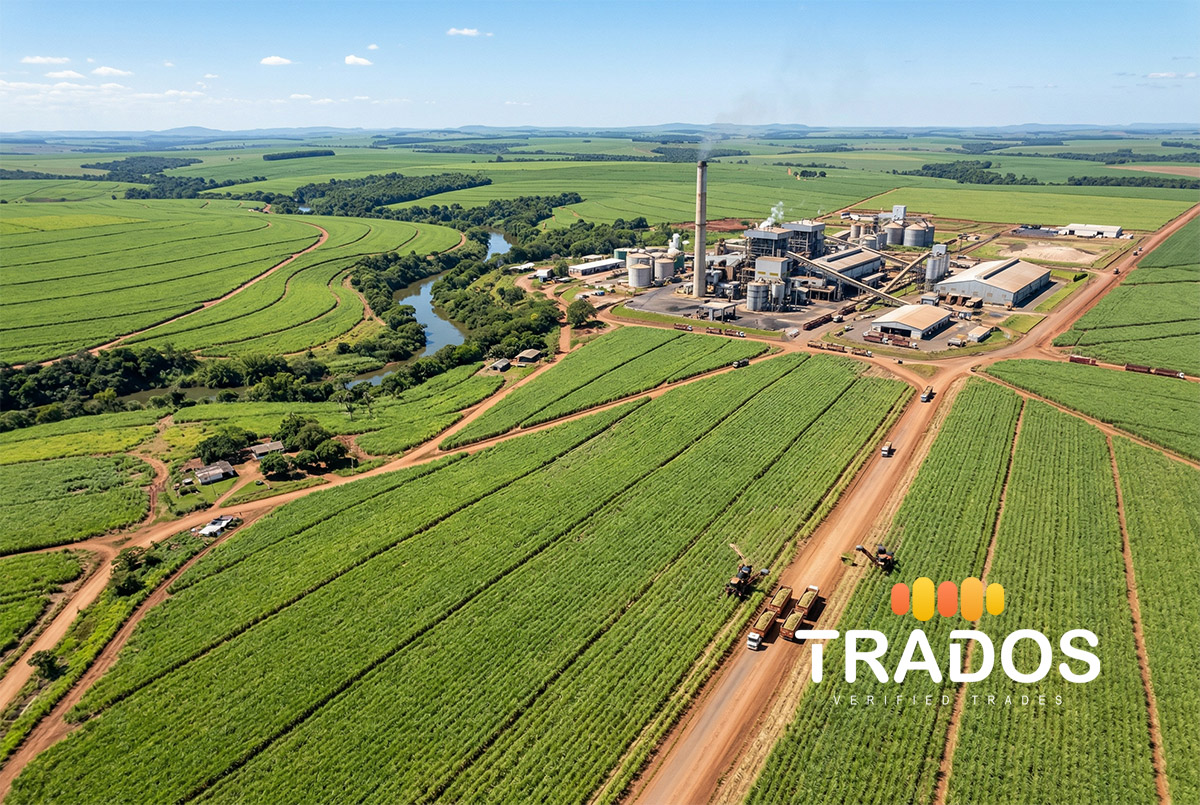
Brazil doesn’t just produce sugar — it dominates global markets. With approximately 50% of world sugar exports originating from Brazilian ports, understanding Brazil’s ICUMSA 45 production capacity isn’t just useful information — it’s essential intelligence for any serious commodity trader.
But here’s what most buyers don’t realize: not all Brazilian sugar is created equal, and production capacity varies dramatically by region, mill group, and even time of year. When evaluating ICUMSA 45 production capacity Brazil, this factor plays a significant role.
Understanding Brazilian Sugar Production: ICUMSA 45 Production Capacity Brazil Essentials
Total Production Overview (2024/2025 Season)
National production:
– Total sugarcane crushed: 620-650 million metric tons
– Total sugar produced: 42-46 million metric tons
– ICUMSA 45 refined sugar: 12-15 million metric tons
– VHP (raw sugar): 28-32 million metric tons
– Ethanol production: Competes for ~50% of cane
Export capacity:
– Total sugar exports: 28-32 million metric tons annually
– ICUMSA 45 exports: 8-10 million metric tons
– VHP exports: 20-22 million metric tons
– Peak export months: June-October (70% of annual volume)
The Ethanol vs. Sugar Decision
Every Brazilian mill makes a daily decision: turn cane into sugar or ethanol?
Factors influencing the split:
– Hydrous ethanol price vs. sugar price
– Currency exchange rates (USD/BRL)
– Gasoline pricing policy ( Petrobras pricing)
– Export demand strength
– Domestic sugar consumption
For traders, this means:
– When ethanol prices are high, sugar production drops
– When USD strengthens, sugar exports become more attractive
– During fuel price crises, sugar availability tightens
ICUMSA 45 Production Capacity by Region
Center-South Region (90% of Production)
This is a critical aspect of ICUMSA 45 production capacity Brazil that every trader should understand.São Paulo State (60% of national ICUMSA 45)
The heart of Brazilian sugar production. If you’re buying ICUMSA 45, chances are it comes from São Paulo.
Production characteristics:
– Refined sugar capacity: 8-9 million MT annually
– ICUMSA 45 share: 70% of state sugar exports
– Crushing season: April-November
– Peak refining: July-October
Major mill groups in São Paulo:
Raízen (Shell-Cosan JV)
– Capacity: 4.5M MT sugar annually
– ICUMSA 45 capacity: ~1.5M MT
– Export terminals: Santos
– Notable: Largest sugar/ethanol producer in Brazil
Copersucar
– Capacity: 3.8M MT sugar annually
– ICUMSA 45 capacity: ~1.2M MT
– Export terminals: Santos, Paranaguá
– Notable: Largest sugar merchant globally
São Martinho
– Capacity: 2.1M MT sugar annually
– ICUMSA 45 capacity: ~700K MT
– Export terminals: Santos
– Notable: Integrated model (cane to port)
Biosev (Louis Dreyfus)
– Capacity: 1.8M MT sugar annually
– ICUMSA 45 capacity: ~600K MT
– Export terminals: Santos, Paranaguá
– Notable: Strong export logistics
Usina Coruripe
– Capacity: 800K MT sugar annually
– ICUMSA 45 capacity: ~250K MT
– Export terminals: Santos
– Notable: Premium quality focus
Minas Gerais (15% of national ICUMSA 45) This best practice for ICUMSA 45 production capacity Brazil has been validated across leading trading firms.
Growing production region with newer, efficient mills.
Production characteristics:
– Refined sugar capacity: 2-2.5 million MT annually
– ICUMSA 45 capacity: ~600-800K MT
– Crushing season: May-December (slightly later than SP)
– Transport: Rail to Santos or Paranaguá
Key players:
– Jalles Machado: 400K MT ICUMSA 45 capacity
– Canaã: 250K MT ICUMSA 45 capacity
– CJ Selecta: 150K MT ICUMSA 45 capacity
Goiás (8% of national ICUMSA 45)
High-efficiency region with modern mills.
Production characteristics:
– Refined sugar capacity: 1.2-1.5 million MT annually
– ICUMSA 45 capacity: ~400-500K MT
– Crushing season: April-October
– Transport: Road/rail to Santos
Key players:
– Grupo Balbo: 200K MT ICUMSA 45 capacity
– Cerradinho: 150K MT ICUMSA 45 capacity
Mato Grosso do Sul (5% of national ICUMSA 45)
Emerging region with growing capacity.
Production characteristics:
– Refined sugar capacity: 800K-1M MT annually
– ICUMSA 45 capacity: ~250-350K MT
– Crushing season: April-October
– Transport: Road to Paranaguá Top trading firms leverage this insight as part of their ICUMSA 45 production capacity Brazil approach.
Key players:
– Grupo Petrópolis: 150K MT ICUMSA 45 capacity
– Edasa: 100K MT ICUMSA 45 capacity
Northeast Region (10% of Production)
Pernambuco, Alagoas, Bahia
Smaller scale but strategically important.
Production characteristics:
– Refined sugar capacity: 1-1.2 million MT annually
– ICUMSA 45 capacity: ~300-400K MT
– Crushing season: September-March (opposite of center-south!)
– Key advantage: Supplies sugar during center-south inter-crop
Key players:
– Usina Santa Terezinha: 120K MT ICUMSA 45 capacity
– Usina São Francisco: 80K MT ICUMSA 45 capacity
– Usina Coruripe (Alagoas unit): 100K MT ICUMSA 45 capacity
ICUMSA 45 Refining Capacity by Mill Type
Fully Integrated Mills (Own Refinery)
Characteristics:
– Produce both raw sugar (VHP) and refined (ICUMSA 45)
– Can switch between products based on demand
– Control entire supply chain
– Most reliable for consistent ICUMSA 45 supply
Capacity: 80% of Brazil’s ICUMSA 45 Getting this right is fundamental to any successful ICUMSA 45 production capacity Brazil strategy.
Advantages for buyers:
– Direct relationship with producer
– Better pricing (no middleman)
– Consistent quality
– Volume guarantees
Examples: Raízen, Copersucar, São Martinho
Independent Refineries
Characteristics:
– Buy raw sugar (VHP) from mills
– Refine to ICUMSA 45
– Located near ports for export efficiency
– More flexible but dependent on raw sugar supply
Capacity: 15% of Brazil’s ICUMSA 45
Advantages for buyers:
– Competitive pricing
– Flexible on specifications
– Located at export ports
Examples: Acúcar Guarani, Jalles Machado (some units)
Toll Refiners
Characteristics:
– Provide refining services for mills
– Don’t own sugar, just process
– Smaller scale
– Limited capacity
Capacity: 5% of Brazil’s ICUMSA 45 The relationship between this and ICUMSA 45 production capacity Brazil is well-documented in the industry.
Note: Less relevant for large export buyers
Seasonal Capacity Variations
Crushing Season Timeline
Center-South (April-November)
| Month | Crushing Intensity | ICUMSA 45 Availability | Export Pricing |
|——-|——————-|————————|—————-|
| April | Low (early harvest) | Limited | Premium (+5-10%) |
| May | Increasing | Building | Premium (+3-5%) |
| June | Moderate | Good | Normal |
| July | High | Excellent | Normal to discount |
| August | Peak | Maximum | Discount (-2-5%) |
| September | Peak | Maximum | Discount (-3-7%) |
| October | High | Excellent | Normal to discount |
| November | Moderate | Good | Normal |
| December | Low (end of harvest) | Limited | Premium (+5-10%) |
| Jan-Mar | Inter-crop | Minimal | Premium (+10-20%) |
Northeast (September-March)
| Month | Crushing Intensity | ICUMSA 45 Availability |
|——-|——————-|————————|
| September | Low | Limited |
| October | Increasing | Building |
| November | Moderate | Good |
| December | High | Excellent |
| January | Peak | Maximum |
| February | Peak | Maximum |
| March | Moderate | Good |
Strategic Buying Windows
Best pricing (buyer advantage):
– August-October (peak harvest, maximum availability)
– Northeast supply during center-south inter-crop (Dec-Mar)
Challenging periods (seller advantage):
– December-March (center-south inter-crop, limited supply)
– Pre-harvest (March-April, mills running low on inventory) For firms focused on ICUMSA 45 production capacity Brazil, this should be a top priority.
Export Terminal Capacity
Port of Santos (70% of ICUMSA 45 Exports)
Terminal 13 (Copersucar/Raízen):
– Storage capacity: 600,000 MT
– Loading rate: 40,000 MT/day
– ICUMSA 45 handling: Bagged and bulk
– Congestion: Moderate (queue: 5-15 days typical)
Terminal 14 (Teage/ private):
– Storage capacity: 300,000 MT
– Loading rate: 25,000 MT/day
– ICUMSA 45 handling: Primarily bulk
– Congestion: Lower than Terminal 13
Private terminals (various):
– Combined capacity: 200,000 MT storage
– Loading rates: 10-20,000 MT/day each
Santos capacity constraints:
– Maximum monthly throughput: 3-3.5M MT
– During peak season (Aug-Oct): Near capacity
– Weather delays: Possible year-round
Port of Paranaguá (20% of ICUMSA 45 Exports)
Public berths:
– Storage capacity: 400,000 MT
– Loading rate: 20,000 MT/day
– ICUMSA 45 handling: Bagged and bulk
– Congestion: Lower than Santos
– Advantage: Alternative when Santos full
Private terminals:
– Combined capacity: 150,000 MT storage
– Modern facilities, efficient loading
Port of Maceió (5% of ICUMSA 45 Exports)
Industry experts agree that ICUMSA 45 production capacity Brazil effectiveness depends heavily on this factor.Northeast region:
– Storage capacity: 100,000 MT
– Loading rate: 8,000 MT/day
– ICUMSA 45 handling: Primarily bagged
– Advantage: Origin for northeast sugar
Other Ports (5% of ICUMSA 45 Exports)
– Recife: 50,000 MT storage
– Suape: 80,000 MT storage
– Vitória: 30,000 MT storage
Capacity Constraints and Bottlenecks
Crushing Capacity Limits
Total Brazilian crushing capacity: ~750M MT cane/year
Current utilization: 85-90%
What this means:
– Brazil cannot easily increase sugar production without new mills
– New mill construction: 3-5 years from planning to operation
– Expansion of existing mills: 1-2 years
Implication for buyers:
– Long-term supply growth is constrained
– Demand growth will outpace capacity additions
– Pricing likely to trend higher over time
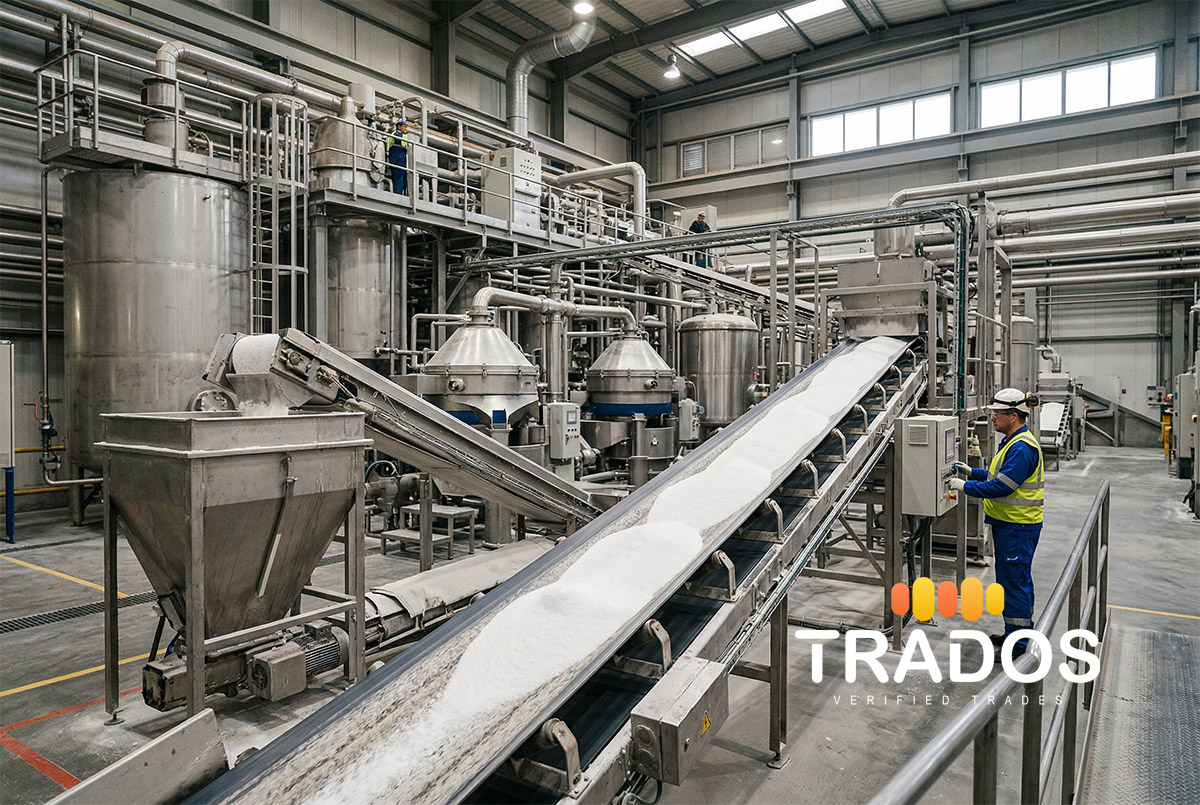
Refining Capacity Bottlenecks
ICUMSA 45 refining is the constraint, not cane crushing. This principle applies broadly across all aspects of ICUMSA 45 production capacity Brazil in commodity markets.
Why refining is limited:
– High capital cost ($50-100M per refinery)
– Complex technology (crystallization, centrifugation)
– Environmental permits difficult to obtain
– Skilled labor requirements
Current utilization: 90-95% during peak season
Implication for buyers:
– ICUMSA 45 will remain tight relative to VHP
– Premium for refined sugar over raw will persist
– Long-term contracts valuable for securing capacity
Logistics Constraints
Port congestion (seasonal):
– August-October: 10-20 day vessel queues possible
– Storage full, loading delays
– Demurrage costs increase
Rail limitations:
– Center-south to Santos: Rail capacity constrained
– Road transport used for overflow (higher cost)
Container availability:
– Global container shortages affect bagged sugar exports
– Bulk shipments less affected
Major Mill Groups: Deep Dive
Raízen (Shell-Cosan Joint Venture)
Scale:
– 35 mills across center-south
– 4.5M MT sugar production capacity
– 1.5M MT ICUMSA 45 capacity
– 2.5B liters ethanol capacity Understanding this connection to ICUMSA 45 production capacity Brazil gives traders a measurable advantage.
ICUMSA 45 capabilities:
– Multiple refineries (São Paulo, Minas, Goiás)
– Consistent premium quality
– Strong export logistics
– Direct sales to major buyers
Buying from Raízen:
– Minimum order: 12,500 MT
– Terms: LC at sight for new buyers
– Long-term relationships: 30-60 day LC possible
– Pricing: ICE #11 + $25-35/MT premium (typical)
Copersucar
Scale:
– 35 member mills (cooperative)
– 3.8M MT sugar production capacity
– 1.2M MT ICUMSA 45 capacity
– World’s largest sugar merchant
ICUMSA 45 capabilities:
– Terminal 13 at Santos (dedicated export facility)
– High-quality consistent product
– Strong financial backing
– Global customer relationships
Buying from Copersucar:
– Minimum order: 12,500 MT
– Strict compliance requirements
– Prefer established traders
– Pricing: ICE #11 + $30-40/MT premium
São Martinho
Scale:
– 7 mills (high-efficiency, large scale)
– 2.1M MT sugar production capacity
– 700K MT ICUMSA 45 capacity
ICUMSA 45 capabilities:
– Integrated model (cane → sugar → port)
– Modern, efficient refineries
– Premium product positioning
Buying from São Martinho:
– Smaller volumes than Raízen/Copersucar
– Quality-focused buyers
– Premium pricing: ICE #11 + $35-45/MT This directly impacts how ICUMSA 45 production capacity Brazil performs in real-world trading scenarios.
Biosev (Louis Dreyfus Company)
Scale:
– 9 mills
– 1.8M MT sugar production capacity
– 600K MT ICUMSA 45 capacity
ICUMSA 45 capabilities:
– Strong export logistics
– Flexible on specifications
– LDC global network backing
Buying from Biosev:
– Competitive pricing
– Flexible terms for established relationships
– Good for spot purchases
How to Access This Capacity
Direct Mill Relationships
Best for: Large volume buyers (25,000 MT+ per deal)
Process:
1. Mill evaluation of buyer (financial capacity, track record)
2. Credit approval process (2-4 weeks)
3. Long-term contract or spot negotiations
4. Allocation of capacity
Advantages:
– Best pricing
– Guaranteed supply
– Direct quality control
Challenges:
– High minimum volumes
– Strict compliance requirements
– Long approval process
– Credit requirements Experienced professionals in ICUMSA 45 production capacity Brazil consistently emphasize this point.
Trading Companies
Best for: Medium volume buyers (5,000-25,000 MT)
Process:
1. Find verified trading company
2. Negotiate terms
3. Trading company sources from mills
4. Margin added (typically $5-15/MT)
Advantages:
– Lower minimum volumes
– Faster execution
– Aggregated supply from multiple mills
– Credit terms possible
Challenges:
– Higher pricing than direct
– Less control over source
– Must verify trading company legitimacy
Brokers
Best for: Small volume buyers or new market entrants
Process:
1. Broker introduces to mills/traders
2. Facilitates negotiation
3. Commission paid by seller (or buyer)
Advantages:
– Access to network
– Market intelligence
– Smaller deal sizes
Challenges:
– Commission costs
– Must verify broker mandate
– Less direct relationship When evaluating ICUMSA 45 production capacity Brazil, this factor plays a significant role.
Future Capacity Outlook
Expansion Projects (2025-2030)
Announced capacity additions:
– Raízen expansion: +200K MT ICUMSA 45 by 2027
– New Copersucar refinery: +150K MT by 2026
– Greenfield projects: +300K MT total (if financed)
Total potential addition: 650K MT ICUMSA 45 by 2030
Context:
– Demand growth projected: 1.5-2M MT additional ICUMSA 45 needed globally
– Conclusion: Capacity will remain tight, supporting premium pricing
Technology Improvements
Yield improvements:
– Genetic cane varieties: +10-15% yield per hectare
– Refining efficiency: +5-8% output per ton of raw sugar
– Automation: Reduced costs, consistent quality
Implication: More sugar from same cane, but not dramatically more capacity
Using Capacity Intelligence
For Buyers
Timing your purchases:
– Buy during peak harvest (Aug-Oct) when mills desperate for volume
– Lock in long-term contracts during buyer-favorable periods
– Avoid inter-crop purchases (Dec-Mar) unless necessary
Selecting suppliers:
– Large volumes: Go direct to Raízen, Copersucar
– Medium volumes: Use verified trading companies
– Tight timing: Northeast mills during center-south inter-crop
Negotiation leverage:
– August-October: Strong buyer position
– December-March: Weak buyer position, pay premium
– Long-term contracts: Negotiate during buyer-favorable periods
How Trados Helps
Capacity visibility:
– Real-time mill production data
– Seasonal availability forecasts
– Port congestion alerts
Verified access:
– Pre-verified relationships with major mills
– Direct mill contact facilitation
– Trading company verification
Deal timing:
– Market intelligence on pricing trends
– Seasonal buying recommendations
– Capacity constraint alerts
Conclusion
Brazil’s ICUMSA 45 capacity is massive but not unlimited. Understanding the regional distribution, seasonal variations, and mill-specific capabilities gives buyers a significant advantage.
Key takeaways:
– 12-15M MT annual ICUMSA 45 capacity
– 90% from center-south, 10% from northeast
– August-October: Maximum availability, best pricing
– December-March: Minimum availability, premium pricing
– Refining capacity is the constraint, not crushing
– Major mills: Raízen, Copersucar, São Martinho, Biosev
For buyers, the message is clear: verify your suppliers, understand the seasonal dynamics, and build relationships before you need the sugar.
Ready to access verified Brazilian ICUMSA 45 capacity?
[Connect with Verified Brazilian Sugar Suppliers →](/contact)
—
Data sources:
– UNICA (Brazilian Sugar Industry Association)
– MAPA (Ministry of Agriculture)
– SECEX (Foreign Trade Secretariat)
– Company financial reports
– Trados market intelligence
Last updated: March 2025. Capacity figures are estimates based on available data and may vary.

Related Articles
Learn more about GAFTA trade standards.
This perfectly captures the shift happening in commodity markets right now. Verification isn’t optional anymore.
What happens legally if a verified LOI turns out to be fraudulent? Is there liability on the verification platform?
Useful content. One thing I’d add is the importance of cultural differences in LOI negotiations. What’s standard in Europe can be very different in Southeast Asia.
As someone who’s dealt with fraudulent LOIs firsthand, I can confirm everything in this article. Wish I had this resource two years ago.
Great article, thanks for sharing.
Been using digital LOI verification for about a year now. The time savings alone justified the switch, but the fraud prevention aspect has been the real game changer.