

In this guide, we explore LOI vs ICPO vs SPA and its impact on your trading operations.
The Document Maze
Walk into any commodity trading office and you’ll find a familiar scene: stacks of documents, scattered PDFs, and a team trying to keep track of which deal is at which stage.
The problem? Most traders don’t fully understand the purpose and power of the documents they’re exchanging. Understanding this connection to LOI vs ICPO vs SPA gives traders a measurable advantage.
Let’s break down the three critical documents in commodity trading:
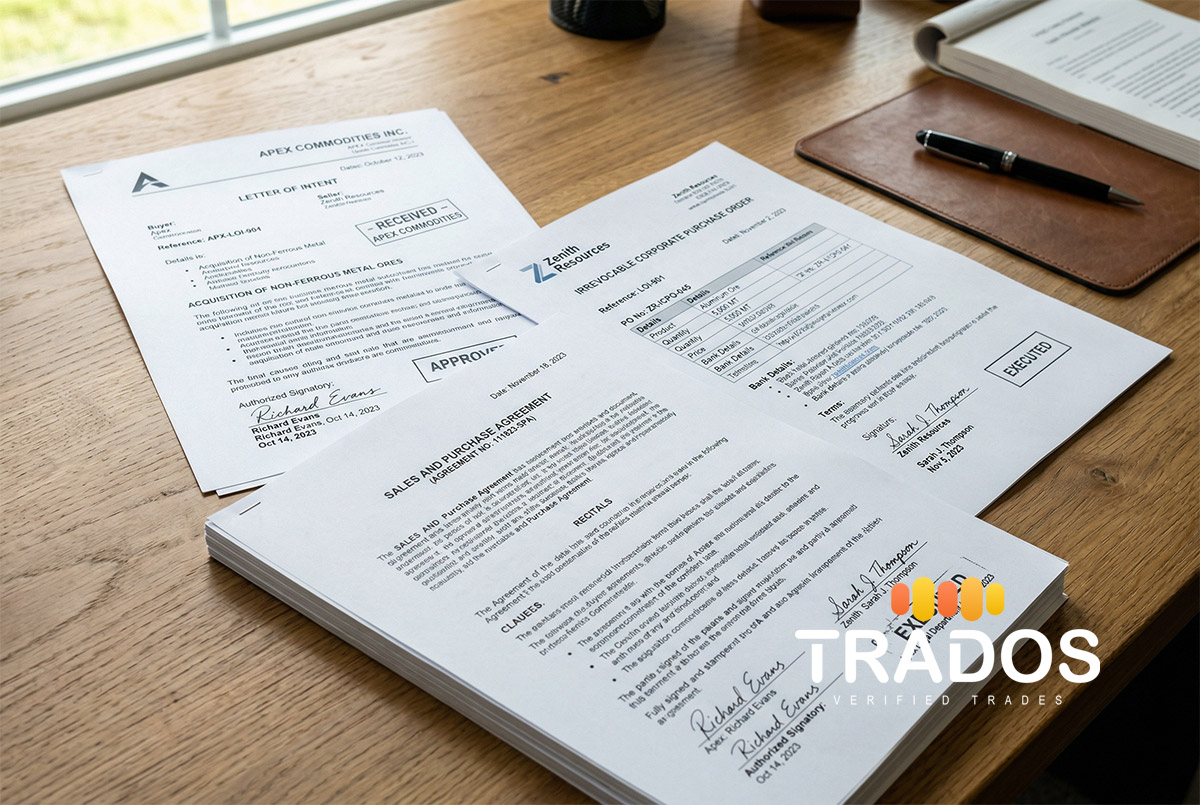
Letter of Intent (LOI): LOI Vs ICPO Vs SPA Essentials
Purpose: Expresses serious interest and outlines preliminary terms
Binding?: Generally non-binding, but sets expectations
When to use: Early stage, after initial discussions
A proper LOI should include:
– Product specifications
– Quantity
– Target price range
– Delivery terms
– Proof of funds requirement
– Response deadline This directly impacts how LOI vs ICPO vs SPA performs in real-world trading scenarios.
Red flag: LOIs without proof of funds are worth the paper they’re printed on.
Irrevocable Corporate Purchase Order (ICPO)
Purpose: Firm commitment to purchase under specified terms
Binding?: More binding than LOI; shows serious intent
When to use: After LOI acceptance, before SPA
An ICPO demonstrates:
– Financial capability
– Corporate authority
– Commitment to proceed
– Acceptance of preliminary terms Experienced professionals in LOI vs ICPO vs SPA consistently emphasize this point.
Red flag: ICPOs from shell companies or without bank references.
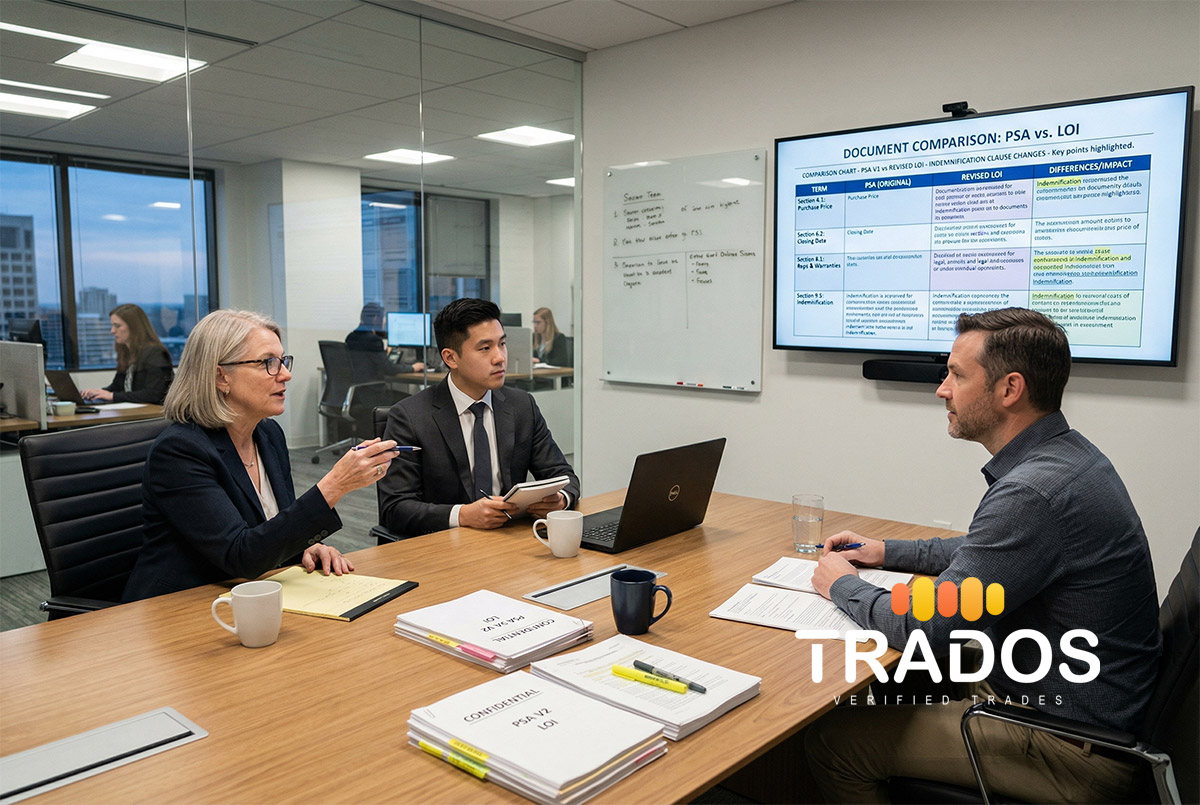
Sales and Purchase Agreement (SPA)
Purpose: The legally binding contract
Binding?: Fully binding
When to use: Final stage, ready to execute
An SPA must include:
– Complete product specifications
– Exact pricing
– Delivery schedule
– Payment terms
– Inspection protocols
– Force majeure clauses
– Dispute resolution When evaluating LOI vs ICPO vs SPA, this factor plays a significant role.
Red flag: SPAs with vague language or missing penalty clauses.
The Trados Approach
On the Trados platform, every document is:
– Tracked: Know exactly which stage each deal is in
– Verified: Documents are authenticated before acceptance
– Stored: Secure, organized access for all parties
– Timestamped: Audit trail for every action
No more lost emails. No more “I never received that.” No more uncertainty.
[See How Document Management Works →](/services)

Related Articles
Learn more about GAFTA trade standards.


This perfectly captures the shift happening in commodity markets right now. Verification isn’t optional anymore.
This is helpful but I’m curious about the timeline. How long does a typical verification process take from start to finish?
We’ve been looking for exactly this kind of structured approach. Going to use this as a blueprint for our internal procedures.
The verification process described here would have saved us from a very costly mistake last year. Better late than never I suppose.
How frequently should verification be renewed? We verified a supplier last year but things change quickly in this market.