

When it comes to LOI fraud history commodity, many traders make costly mistakes that can be avoided. # The History of LOI Fraud in Commodity Trading
The Letter of Intent (LOI) was designed to simplify international trade—a non-binding expression of interest that precedes formal contracts. But where legitimate commerce creates opportunity, fraud soon follows. The history of LOI fraud in commodity trading reveals an arms race between increasingly sophisticated scammers and the verification systems developed to stop them.
The 1970s: The Nigerian Origins
LOI fraud traces its modern lineage to Nigeria in the early 1970s. As oil revenues flooded the Nigerian economy following the OPEC oil embargo, West Africa became a hub for international commodity trading. The region’s legitimate petroleum business created the perfect cover for what would become known as the “419 scam”—named after Section 419 of the Nigerian Criminal Code, which addressed fraud and dishonest conduct. Understanding this connection to LOI fraud history commodity gives traders a measurable advantage.
The original advance-fee fraud was elegantly simple. Fraudsters posed as Nigerian government officials or representatives of the National Petroleum Corporation, claiming access to discounted crude oil allocations. They required buyers to submit Letters of Intent and pay upfront fees for “processing,” “registration,” or “licensing.” The LOI served as the hook—once signed, victims had demonstrated serious intent, making them psychologically invested in seeing the deal through.
By the late 1970s, these scams had expanded beyond oil to include agricultural commodities: cocoa, palm oil, and later sugar. The mechanics remained consistent: a forged allocation document, a convincing backstory about bureaucratic delays, and a modest advance fee that seemed reasonable compared to the promised returns. This directly impacts how LOI fraud history commodity performs in real-world trading scenarios.
The 1980s: Fax Machines and Document Forgery: LOI Fraud History Commodity Essentials
The widespread adoption of fax machines in the 1980s transformed LOI fraud. What once required expensive international phone calls and mailed documents could now be executed from anywhere with a phone line. Fraudsters in Lagos could operate with the appearance of London sophistication.
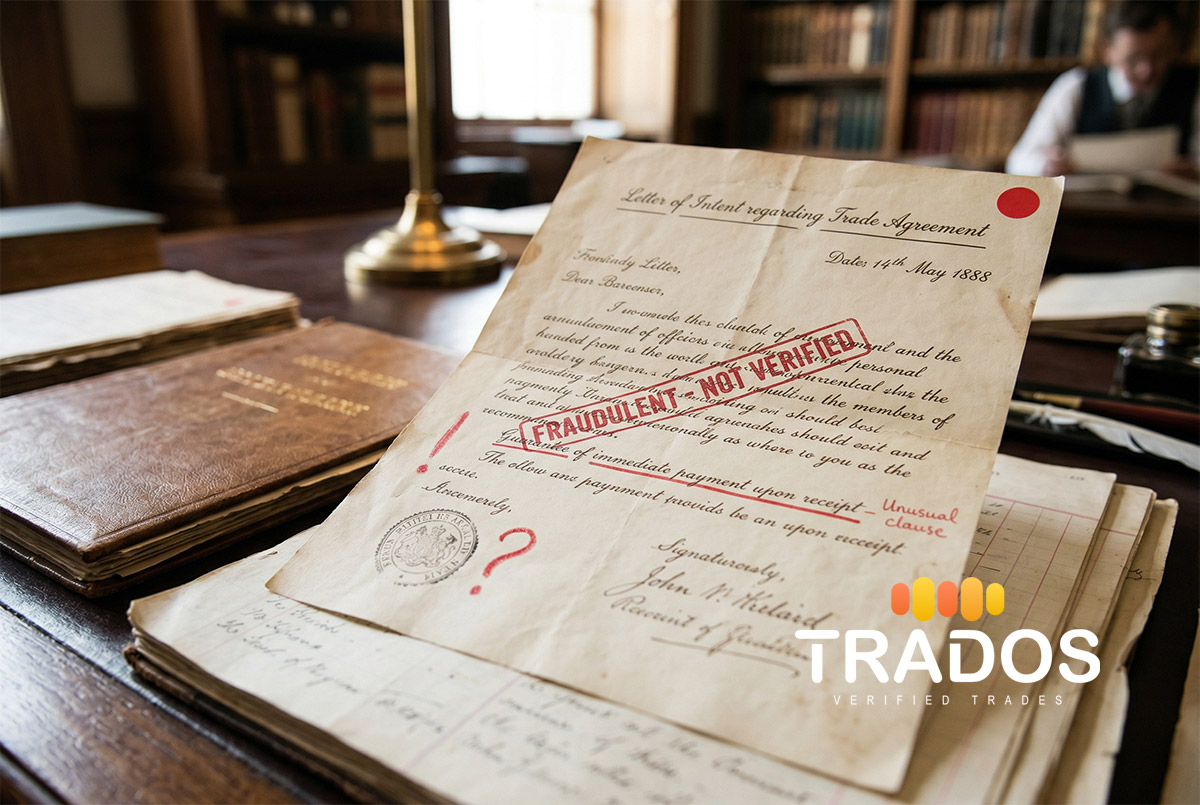
This era saw the emergence of professional document forgery services. Fake Letterheads bearing the logos of Nigerian ministries, Central Bank of Nigeria seals, and forged signatures of actual officials became commodities themselves. The LOI evolved from a simple letter to a complex document package—often accompanied by falsified certificates of origin, warehouse receipts, and bank guarantees that existed only on paper. Experienced professionals in LOI fraud history commodity consistently emphasize this point.
The International Chamber of Commerce (ICC) first documented this trend in a 1986 circular warning international traders about “fictitious offers of Nigerian crude oil and other commodities.” The ICC noted that the fraudsters had become sophisticated enough to reference real allocation numbers and quote accurate current market prices—details that lent credibility to otherwise fictional transactions.
Losses during this period were estimated in the hundreds of millions of dollars annually, though precise figures remain elusive because many victims never reported the crimes, fearing reputational damage or admitting they had violated their own companies’ due diligence protocols. When evaluating LOI fraud history commodity, this factor plays a significant role.
The 1990s: The Internet Revolution
The arrival of email fundamentally changed the economics of LOI fraud. Where fraudsters once maintained offices, fax machines, and teams of accomplices, a single operator with a computer could now reach thousands of potential victims simultaneously. The infamous “Nigerian Prince” emails—often poorly written and seemingly obvious—were actually a filtering mechanism. Anyone who responded to such an obviously fraudulent message was pre-qualified as gullible.
More sophisticated operators focused on the commodities sector specifically. They targeted small and medium trading houses hungry for deals in competitive markets. The LOI became a weapon in their arsenal—not merely a document to extract fees, but a tool to extract sensitive business information. This is a critical aspect of LOI fraud history commodity that every trader should understand.
When a trading house submitted an LOI for a sugar or grain shipment, the fraudster obtained their company details, banking references, and signatures. This information was then used to create fake confirmations, forge bank documents, or even impersonate the victim company in dealings with other traders. The LOI had transformed from a simple expression of interest into an intelligence-gathering tool.
The 2000s: Institutional Responses and Adaptation
The Nigerian government’s establishment of the Economic and Financial Crimes Commission (EFCC) in 2004 marked a turning point. For the first time, Nigeria had a dedicated agency to combat advance-fee fraud. The EFCC conducted high-profile raids, prosecuted prominent fraudsters, and established international cooperation agreements with law enforcement agencies in the United States, United Kingdom, and European Union. This best practice for LOI fraud history commodity has been validated across leading trading firms.
Simultaneously, the U.S. Commodity Futures Trading Commission (CFTC) expanded its oversight of commodity trading fraud. The CFTC’s Division of Enforcement began specifically targeting schemes involving fraudulent solicitations for commodity trading, including those leveraging falsified LOIs and trade documents.
But regulation created adaptation. As Nigerian operations faced increasing scrutiny, fraud networks decentralized. Operations moved to Ghana, Senegal, and Côte d’Ivoire. Eastern European criminal organizations—already skilled in document forgery and financial crime—entered the commodity fraud space. The internet enabled coordination across continents, with document forgers in one country, money mules in another, and “salespeople” operating from a third. Top trading firms leverage this insight as part of their LOI fraud history commodity approach.
The 2010s: Sophisticated Document Manipulation
The 2010s witnessed the industrialization of trade document fraud. The Trafigura nickel fraud case of 2023—while more recent in revelation—exemplifies techniques that evolved throughout this decade. In that case, fraudsters allegedly sold containers of nickel that either didn’t exist or contained worthless material, supported by falsified inspection certificates and warehouse documents.
LOI fraud became embedded within larger schemes. Rather than simply collecting advance fees, sophisticated fraudsters now used LOIs as the first step in elaborate trade finance frauds. They would obtain an LOI, use it to secure financing or letters of credit, then either disappear with the funds or deliver substandard cargo backed by forged certificates. Getting this right is fundamental to any successful LOI fraud history commodity strategy.
The International Maritime Bureau (IMB) documented a sharp increase in trade finance fraud during this period, with the organization noting that “scammers manipulate shipping documents to swindle banks” with increasing sophistication. Bills of lading, certificates of analysis, and inspection reports from seemingly reputable agencies like SGS or Intertek became regular targets for forgery.
The Modern Era: Digital Deception
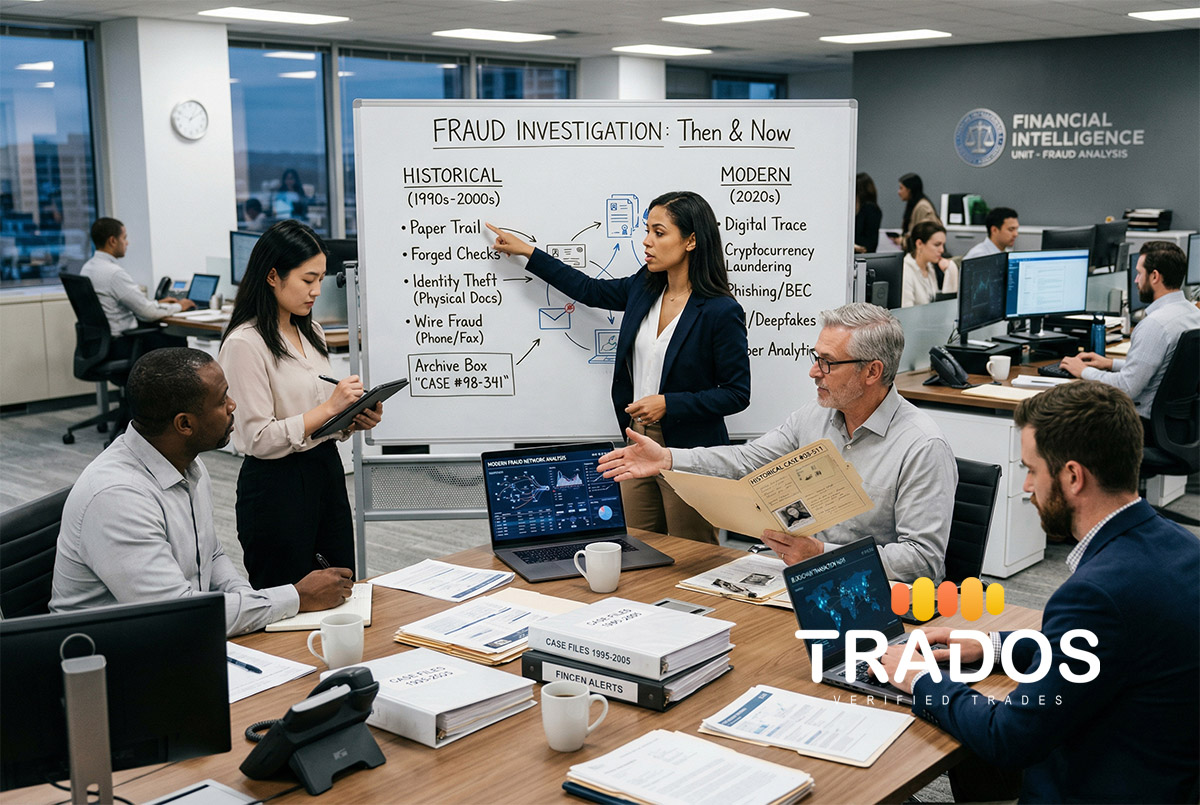
Today’s LOI fraud operates at the intersection of traditional document forgery and digital manipulation. PDF editing software, high-quality scanners, and AI-powered language tools have lowered the barrier to creating convincing fraudulent documents. A fraudster can now produce a professional LOI on authentic-looking letterhead, complete with realistic signatures and watermarking, in minutes. The relationship between this and LOI fraud history commodity is well-documented in the industry.
The CFTC’s 2023 enforcement actions highlighted this evolution, charging fake commodity trading platforms with fraud schemes that misappropriated millions from investors. These platforms often began with seemingly legitimate LOI processes, requiring document submission and verification steps that created an aura of authenticity.
Regulatory responses have similarly modernized. The CFTC’s Whistleblower Program now offers awards of 10-30% of monetary sanctions collected, incentivizing insiders to report fraudulent schemes. Banks and trading houses have implemented AI-powered document verification systems that can detect inconsistencies invisible to human reviewers. For firms focused on LOI fraud history commodity, this should be a top priority.
The Evolution of Verification: Lessons Learned
The history of LOI fraud reveals several enduring lessons:
Verification Cannot Be Outsourced Blindly. The reliance on third-party inspection certificates has repeatedly proven vulnerable. Documents can be forged, inspectors can be bribed, and certificates can be purchased from corrupt agents within legitimate organizations. Industry experts agree that LOI fraud history commodity effectiveness depends heavily on this factor.
The Human Element Remains the Weakest Link. Every major fraud case involves someone ignoring red flags—unrealistic pricing, rushed timelines, unusual payment terms, or simply deals that seem “too good to be true.” The LOI’s psychological power lies in triggering commitment bias: once a trader signs, they want to believe the deal is real.
Regulation Follows Innovation. By the time regulatory bodies establish frameworks to address specific fraud types, criminals have already moved to new techniques. The EFCC’s creation in 2004 disrupted Nigerian operations; by 2010, the business model had spread globally. This principle applies broadly across all aspects of LOI fraud history commodity in commodity markets.
Documentation Is Not Verification. Possessing an LOI, a certificate of origin, or even a bank guarantee proves nothing. These documents must be verified at their source—contacting the issuing authority directly, not through channels provided by the counterparty.
The Future: Trust Through Technology
Blockchain verification, digital trade documentation standards, and real-time tracking technologies represent the next phase in this historical arms race. The challenge remains consistent across decades: establishing trust between parties who cannot meet face-to-face, who operate across jurisdictions, and who must rely on documents that can be forged.
The history of LOI fraud is ultimately a history of trust mechanisms—and their repeated failure. From the fax machines of the 1980s to the blockchain platforms of the 2020s, each innovation in verification has been met with innovation in deception. The traders who survive are those who understand this history and build their verification processes accordingly.
For commodity trading professionals today, the lesson is clear: the LOI remains a

Related Articles
Learn more about GAFTA trade standards.


Brilliant article. The real-world examples make the concepts so much more tangible and easier to implement.
This is exactly what I needed to read today.
Can you elaborate on the digital signature verification part? We’ve been using a manual process and I’m not sure how to transition.
Bookmarked this for future reference.
Sent this to our entire compliance department. The frameworks outlined here align perfectly with what we’ve been trying to build internally.
Good article overall but I think it could benefit from more specific examples of red flags in different commodity sectors. Sugar and oil LOIs have very different characteristics.