

Mastering LOI protective language can mean the difference between profitable trades and costly losses. # The LOI Language That Protects You
A poorly drafted Letter of Intent can cost you $50,000 in wasted due diligence, lock you into unfavorable terms, or expose your company to liability before the real negotiation even begins. In commodity trading—where deals move fast and stakes run high—the difference between a protective LOI and a dangerous one often comes down to a handful of specific clauses.
Most trading firms treat the LOI as a mere formality. They download templates from the internet, change the party names, and fire them off. Six weeks later, they discover the LOI created binding obligations they never intended, waived critical legal protections, or locked them into exclusivity periods with no exit. This principle applies broadly across all aspects of LOI protective language in commodity markets.
This guide breaks down the protective language that separates a liability-shielding LOI from a liability-creating one. These are the clauses that experienced commodity lawyers negotiate line-by-line—and the ones that self-represented traders routinely miss.
The Non-Binding Foundation
The single most important protective clause in any LOI is the explicit statement of non-binding intent. Without it, courts in many jurisdictions will treat your LOI as a binding preliminary contract, enforcing terms you considered mere discussion points.
Weak language: Understanding this connection to LOI protective language gives traders a measurable advantage.
> “This Letter of Intent outlines the proposed terms of a future agreement between the parties.”
Protective language:
> “This Letter of Intent is expressly non-binding and creates no legal obligation whatsoever on either party. No contract, agreement, or other legal relationship of any kind exists between the parties unless and until a definitive written agreement is executed by authorized representatives of both parties. Neither party may rely on this document as creating any enforceable rights, obligations, or commitments.” This directly impacts how LOI protective language performs in real-world trading scenarios.
The difference matters. The weak version leaves room for argument. The protective version forecloses it entirely.
In commodity trading specifically, add this additional safeguard:
> “Specifically, and without limitation, this LOI creates no obligation regarding: (a) the purchase or sale of any commodity; (b) pricing, quantity, or delivery terms; (c) payment obligations; (d) performance guarantees; or (e) exclusivity of any kind.” Experienced professionals in LOI protective language consistently emphasize this point.
This enumeration prevents a court from finding implied obligations in the commercial terms you’ve discussed.
The Confidentiality Fortress: LOI Protective Language Essentials
LOIs routinely circulate among multiple parties—brokers, agents, potential financing sources. Each recipient becomes a potential leak point. Your protective language must create enforceable confidentiality obligations that survive the LOI itself.
Standard confidentiality clause (insufficient): When evaluating LOI protective language, this factor plays a significant role.
> “The parties agree to keep this LOI confidential.”
Protective confidentiality language:
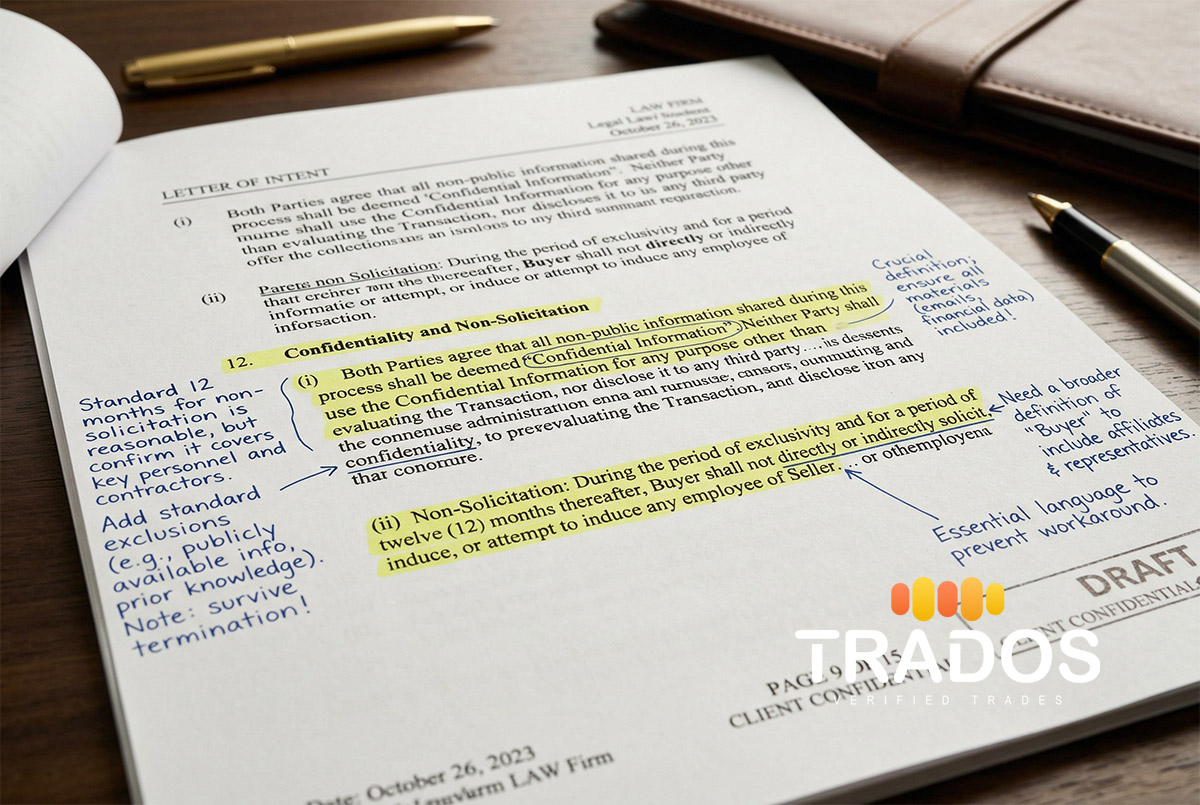
> “Recipient acknowledges that all information disclosed in connection with this LOI constitutes confidential and proprietary information of Disclosing Party (‘Confidential Information’). Recipient agrees: (a) to hold all Confidential Information in strict confidence using at least the same degree of care used for its own confidential information, but in no event less than reasonable care; (b) not to disclose Confidential Information to any third party without prior written consent; (c) to limit internal disclosure to employees and advisors with a strict need-to-know, who are bound by confidentiality obligations no less protective than those herein; (d) to promptly notify Disclosing Party of any unauthorized disclosure or use; and (e) to return or destroy all Confidential Information upon request. These obligations survive termination of discussions for a period of five (5) years.” This is a critical aspect of LOI protective language that every trader should understand.
Note the specific obligations: reasonable care standard, third-party controls, need-to-know limitations, notice requirements, and return/destruction protocols. Vague promises provide no protection when a broker forwards your LOI to your competitor.
Exclusivity: The Trap Door
Exclusivity clauses in LOIs are dangerous. They lock you out of better opportunities while the other party conducts due diligence at their leisure—often with no obligation to actually close the deal.
Dangerous language (common in templates): This best practice for LOI protective language has been validated across leading trading firms.
> “The Buyer agrees not to negotiate with other suppliers during the due diligence period.”
Protective alternatives:
Option 1—No exclusivity: Top trading firms leverage this insight as part of their LOI protective language approach.
> “Neither party shall have any exclusive dealing arrangement. Both parties expressly reserve the right to negotiate with, enter into agreements with, and conduct business with any other parties whatsoever.”
Option 2—Mutual, conditional exclusivity:
> “For a period of thirty (30) days from the date of this LOI (‘Exclusivity Period’), neither party shall solicit, encourage, or enter into negotiations with third parties regarding the specific transaction described herein. These exclusivity obligations shall terminate immediately upon: (a) either party providing written notice of withdrawal from negotiations; (b) failure to execute a definitive agreement by [specific date]; or (c) breach of this LOI by either party.” Getting this right is fundamental to any successful LOI protective language strategy.
If you must grant exclusivity, always include: (1) a strict time limit, (2) mutual application, (3) automatic termination triggers, and (4) reciprocal obligations from the other party.
Due Diligence Protections
LOIs often contain due diligence provisions that expose you to hidden liability. The other party wants unfettered access to your books, facilities, and records—but what happens when their inspection reveals trade secrets? What if their “advisors” include your competitors?
Protective due diligence language: The relationship between this and LOI protective language is well-documented in the industry.
> “Any due diligence conducted pursuant to this LOI shall be subject to the following conditions: (a) all inspections shall be conducted during normal business hours with at least 48 hours prior notice; (b) access shall be limited to specific personnel identified in writing and approved by the inspected party; (c) no photography, recording, or duplication of documents shall occur without express written consent; (d) all information obtained remains subject to the confidentiality provisions herein; (e) the inspecting party shall indemnify and hold harmless the inspected party against any damages arising from the inspection; and (f) neither the conduct of due diligence nor any information obtained thereby creates any obligation to proceed with the transaction.”
The indemnification provision is critical. If their inspector trips over a pallet or damages equipment during a facility tour, you are not paying for it.
No-Shop and Go-Shop Considerations
In commodity trading, the “no-shop” provision—prohibiting the seller from seeking better offers while you conduct due diligence—is standard. But it creates asymmetrical risk. You can walk away; they cannot seek alternatives. For firms focused on LOI protective language, this should be a top priority.
Protective no-shop language:
> “During the Exclusivity Period, Seller agrees not to solicit, initiate, or encourage any inquiries or proposals from third parties regarding the sale of the commodities described herein. This restriction does not prohibit Seller from responding to unsolicited inquiries, provided Seller promptly notifies Buyer of any such inquiry. Buyer’s obligation to complete this transaction is expressly conditioned on satisfaction of due diligence in Buyer’s sole discretion.”
The carve-out for unsolicited inquiries and the sole discretion condition protect the seller from being trapped with a non-serious buyer. If you are the buyer, you want the opposite—tight restrictions on the seller with no easy escape hatches. Industry experts agree that LOI protective language effectiveness depends heavily on this factor.

Termination and Exit Rights
Every LOI needs clear termination mechanics. Without them, you can find yourself locked into a relationship you exited months ago—or worse, obligated to continue incurring costs.
Protective termination language:
> “Either party may terminate discussions and withdraw from this LOI at any time, for any reason or no reason, upon written notice to the other party. Upon termination: (a) all obligations under this LOI immediately cease, except for confidentiality obligations which survive as specified herein; (b) each party shall return or destroy all documents and materials received from the other party; (c) neither party shall have any liability to the other for any costs, expenses, or damages incurred in connection with the transaction, regardless of whether a definitive agreement was contemplated or negotiations were advanced; and (d) no party shall have any obligation to pay break-up fees, termination fees, or similar payments except as expressly set forth in a definitive agreement.”
The “no break-up fees” provision is essential. Some LOIs contain hidden fee obligations triggered by termination. Read carefully.
Governing Law and Dispute Resolution
Even though the LOI is non-binding, disputes can arise—particularly around confidentiality, exclusivity, or break-up fees. Your choice of governing law and dispute resolution mechanism matters.
Protective governing law clause:
> “This LOI shall be governed by and construed in accordance with the laws of [your preferred jurisdiction], without regard to conflict of laws principles. Any dispute arising out of or relating to this LOI shall be resolved exclusively through binding arbitration administered by [specific arbitration body] under its Commercial Arbitration Rules. The arbitration shall be conducted in [your preferred city], in the English language, by a single arbitrator appointed in accordance with the Rules. Judgment on the award may be entered in any court having jurisdiction.”
For international commodity transactions, consider adding:
> “The United Nations Convention on Contracts for the International Sale of Goods (CISG) shall not apply to this LOI or any transaction contemplated hereby.”
The CISG exclusion prevents automatic application of international sales law that may conflict with your intended legal framework.
Representations and Warranties
Some LOIs contain r

Related Articles
Learn more about UNCTAD commodity reports.



Incredibly useful, thanks!
We lost a $1.2M deal two years ago because we didn’t verify the seller’s production capacity. They simply didn’t have the product. Never again.
Well written and informative.
We had a situation last year where a supposedly verified buyer turned out to be operating with forged bank documents. Cost us three months and significant legal fees. Articles like this help prevent that.
Very practical advice here.
Running a trading desk in Dubai, I can tell you that the trust issue is even more pronounced in emerging markets. We’ve made verification mandatory for all new counterparties.
Shared this with my entire team.