

This article covers everything you need to know about LOI scams sugar traders. # The LOI Scams Targeting Sugar Traders
Brazil produces roughly 38 million metric tons of sugar annually, making it the world’s largest exporter. For traders, this abundance represents opportunity. For scammers, it represents a target-rich environment. The Letter of Intent—an innocuous preliminary document meant to express buyer interest—has become the weapon of choice for fraudsters targeting the sugar market.
In commodity trading, 70-80% of initiated deals never close. But among the deals that fail, a growing percentage aren’t failures of logistics or financing—they’re scams designed from the start to extract money, documents, or leverage for future fraud. Experienced professionals in LOI scams sugar traders consistently emphasize this point.
How the LOI Scam Works
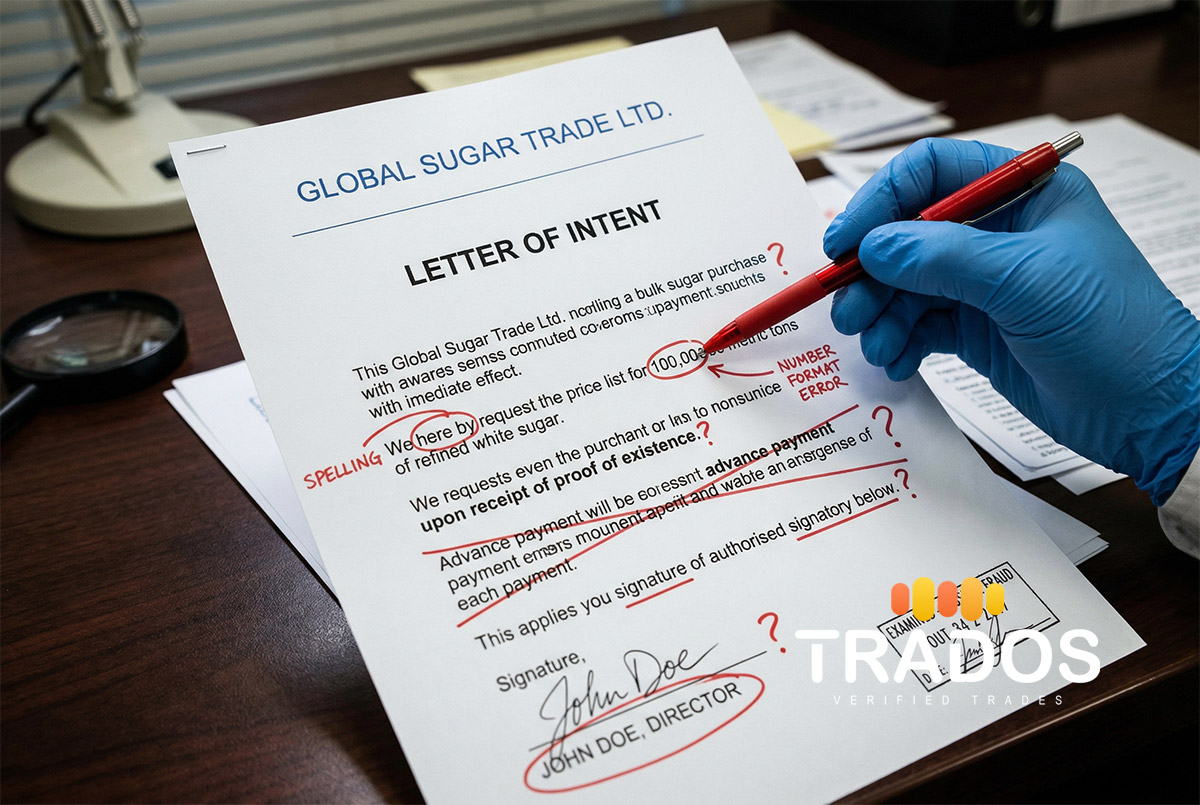
The scam follows a predictable playbook. A “seller”—often posing as a Brazilian mill representative or authorized agent—contacts buyers with an attractive offer. ICUMSA 45 at $50-100 below market. Fifty thousand metric tons available immediately. The catch? They need a signed LOI to “secure allocation” or “present to the board.”
The LOI seems harmless. It’s non-binding, after all. But here’s what happens next:
Document Harvesting: The scammer now possesses your company letterhead, authorized signatures, passport copies, and banking details. Between July 2023 and July 2024, financial losses linked to document theft and online scams in Brazil exceeded R$186 billion. Your LOI becomes ammunition for the next phase. When evaluating LOI scams sugar traders, this factor plays a significant role.
The Pivot: Your documents get used to approach legitimate suppliers, posing as your company’s representative. Real sellers receive what appears to be genuine buyer interest. When the scammer fails to perform, it’s your company name that gets burned. Reputation damage from association with failed deals can linger for years.
The Advance Fee: Some variations skip the middleman and go straight for your wallet. The scammer requests a “registration fee,” “allocation deposit,” or “due diligence payment.” Once paid, communication ceases. The sugar never existed. The seller disappears into a maze of shell companies and burner phones.
Sugar-Specific Fraud Patterns: LOI Scams Sugar Traders Essentials
Sugar trading attracts specialized scams because the product attracts unsophisticated buyers. Food companies, distributors, and traders from non-traditional markets see Brazil as a source of cheap supply. Scammers exploit this knowledge gap with industry-specific tactics. This is a critical aspect of LOI scams sugar traders that every trader should understand.
The Phantom Allocation Scam
“We have 25,000 MT allocated at Raízen/Copersucar/São Martinho,” the seller claims. They produce documents—certificates, analysis reports, photos—that appear legitimate because they are legitimate. Scammers harvest real documents from previous transactions (failed or completed) and repackage them as proof of current availability.
The buyer signs the LOI, sometimes even issues an ICPO, and only discovers the fraud when attempting to verify allocation directly with the mill. By then, the LOI has been shopped to a dozen other buyers, each believing they have exclusive access.
The Volume Inflation Game
Legitimate buyers present LOIs reflecting actual demand—5,000 MT, 10,000 MT, whatever their market can absorb. Scammers flip this dynamic. They approach multiple buyers simultaneously, collecting LOIs totaling 200,000+ MT for “available” allocations of perhaps 25,000 MT. This best practice for LOI scams sugar traders has been validated across leading trading firms.
The game continues until someone demands proof of allocation or attempts to verify with the source. The scammer’s goal isn’t to close one deal—it’s to harvest the maximum number of LOIs before exposure. Your document becomes currency in their operation.
The Fake SGS Certificate Racket
SGS inspection certificates are supposed to guarantee quality and quantity. Sophisticated fraudsters produce forgeries indistinguishable from genuine documents to untrained eyes. They reference real SGS offices, use stolen or fabricated certificate numbers, and accompany LOIs with these “proofs” of past performance.
The ICUMSA rating—the international standard for sugar quality—becomes part of the deception. Scammers promise ICUMSA 45 (the highest grade) at prices matching ICUMSA 150 or lower. The spread between promise and reality represents pure profit for the fraudster. Top trading firms leverage this insight as part of their LOI scams sugar traders approach.
Red Flags That Scream Fraud
Experienced sugar traders develop instincts for bad actors. These warning signs should trigger immediate verification, not continued negotiation.
Price Below Market by 15% or More: No legitimate Brazilian mill sells ICUMSA 45 at $350/MT when the market trades at $450. The “urgent sale due to oversupply” or “mill needs cash flow” explanations are standard script elements.
Pressure for Quick LOI Submission: “Allocation expires in 24 hours.” “Board meets tomorrow morning.” Legitimate sellers don’t evaporate because you need 48 hours for due diligence. Getting this right is fundamental to any successful LOI scams sugar traders strategy.
Refusal to Provide Direct Mill Contact: Any seller claiming direct mill allocation should be able to provide a verifiable contact at that mill—not an email address they created, but a publicly listed phone number you can call independently.
Requests for Advance Fees: Registration fees, membership fees, due diligence payments—legitimate sugar transactions don’t require upfront payments from buyers. Payment occurs through letter of credit against shipping documents.
Gmail/Hotmail/Yahoo Email Addresses: Major Brazilian mills and established trading houses use corporate domains. An “allocation holder” using a free email service is either amateur or fraudulent. The relationship between this and LOI scams sugar traders is well-documented in the industry.
Impersonation of Known Entities: Scammers routinely pose as representatives of Raízen, Copersucar, Czarnikow, or other recognized names. A quick call to the company’s actual office confirms whether your contact is legitimate.
Protection Strategies That Work
Avoiding sugar trading scams isn’t about paranoia—it’s about verification. Implement these practices consistently, and fraudulent approaches become obvious quickly.
Verify Before You Trust
Never accept claims at face value. A seller claiming mill allocation should provide:
– Written authorization from the mill (verifiable by calling the mill’s listed number)
– CNPJ (Brazilian tax ID) that matches the claimed entity
– Physical office address that appears on Google Maps
– Corporate email domain matching the company website For firms focused on LOI scams sugar traders, this should be a top priority.
Spend 30 minutes on verification. It saves weeks recovering from fraud.
Control Your Documents
Treat LOIs like financial instruments, not casual correspondence. Include:
– Expiration dates (72 hours maximum)
– Specific conditions precedent (proof of allocation, SGS agreement)
– Watermarks indicating “For Verification Only – Not Binding”
– Contact information for your verification
Never provide passport copies, banking details, or corporate resolutions until you’ve verified the counterparty’s legitimacy through independent channels. Industry experts agree that LOI scams sugar traders effectiveness depends heavily on this factor.
Use Escrow and Letter of Credit Structures
Legitimate sugar transactions follow established payment flows: Letter of Credit issued against shipping documents, with SGS inspection as condition for payment. Any seller demanding wire transfer, cash deposits, or payment to third parties is either fraudulent or incompetent. Neither represents a viable trading partner.
Build Verification Networks
Experienced sugar traders maintain relationships with:
– SGS offices in Santos and Paranaguá
– Mill commercial departments
– Licensed Brazilian customs brokers
– Established freight forwarders
Before engaging new counterparties, run their documentation past these contacts. The small cost of verification prevents massive losses from fraud. This principle applies broadly across all aspects of LOI scams sugar traders in commodity markets.
Document Everything
Maintain records of all communications, document exchanges, and verification attempts. When you encounter scammers, report them to industry associations, LinkedIn (if they operate there), and your network. The sugar trading community is smaller than it appears—shared intelligence protects everyone.

When Scammers Target You Anyway
Despite precautions, sophisticated scammers may still approach. Recognize the escalation patterns:
The Urgency Spiral: Initial contact mentions standard timelines. As you delay LOI submission, the story changes—”another buyer is interested,” “price increases tomorrow,” “allocation released if not secured.” This manipulation attempts to bypass your verification instincts. Understanding this connection to LOI scams sugar traders gives traders a measurable advantage.
Document Sprawl: You request proof of allocation. They provide certificates, past B/Ls, mill photos, technical specifications—everything except direct mill contact. Volume of documentation substitutes for verifiability.
Social Proof Pressure: “We’ve closed with [recognizable company name].” “Our client list includes [impressive roster].” These claims are unverified and often fabricated. Legitimate sellers don’t need to reference other clients to establish credibility.
The Almost-There Trap: You’ve issued LOI but haven’t paid. Scammers pivot to “small administrative fee” or “legal review charge”—amounts small enough to seem reasonable ($500-$2,000) but large enough to hurt when multiplied across dozens of victims. This directly impacts how LOI scams sugar traders performs in real-world trading scenarios.
The Real Cost of LOI Fraud
Beyond immediate financial losses, sugar trading scams inflict lasting damage:
Opportunity Cost: Weeks spent on fraudulent deals are weeks not spent on legitimate transactions. In volatile markets, this opportunity cost often exceeds any direct loss.
Reputation Risk: When your LOI appears in fraudulent presentations to real sellers, your company becomes associated with scam attempts. Some mills maintain internal blacklists based on these associations.
Market Access: Victims of fraud often retreat from Brazilian sugar markets entirely, ceding opportunity to competitors with better verification practices.
Regulatory Scrutiny: Banking relationships become strained when fraud attempts involve document forgery or suspicious transaction patterns. Compliance departments don’t distinguish between victim and perpetrator in initial reviews.
Building a Fraud-Resistant Operation
Sugar traders who thrive in Brazilian ma

Related Articles
Learn more about ICUMSA sugar standards.

Can you elaborate on the digital signature verification part? We’ve been using a manual process and I’m not sure how to transition.
I manage a small trading desk and articles like this help us punch above our weight. Practical, clear, and immediately useful.